When Marriage Began With Cake in the Church Basement — Before Weddings Became Million-Dollar Productions
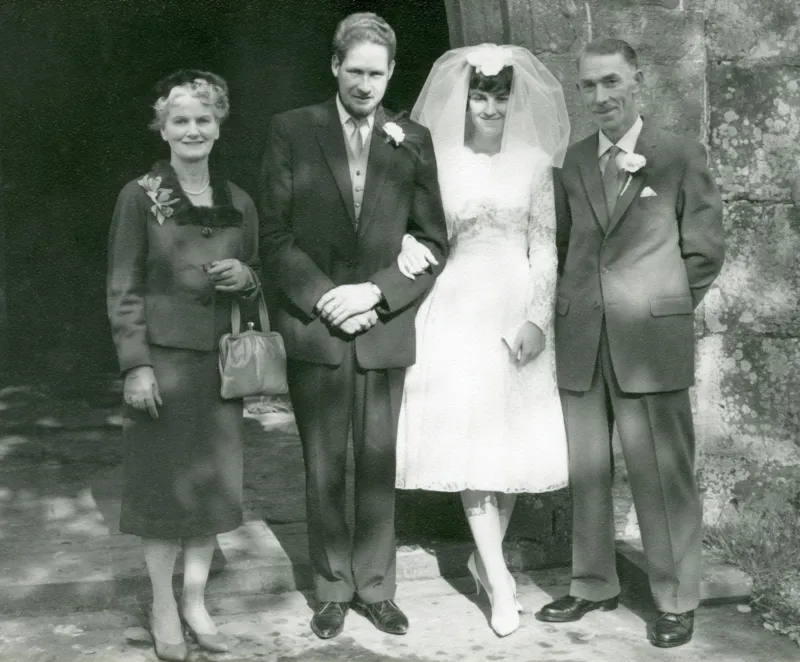
Saturday afternoon, June 1962. Mary Ellen walks down the aisle of St. Mark's Lutheran in a dress her aunt sewed from a pattern that cost fifty cents. After the ceremony, guests move to the church basement where tables are covered with homemade casseroles, Jell-O salads, and a two-layer cake baked by the bride's mother. The whole celebration costs $127, including the flowers, and everyone goes home happy.
 Photo: St. Mark's Lutheran, via images.macrumors.com
Fast-forward sixty years. Today's average American wedding costs $35,000 — more than many couples earn in a year, more than a down payment on a house, more than four years of college tuition in 1962. What was once a simple community celebration has become a massive consumer production that can take years to plan and decades to pay off.
When Communities Celebrated Together
Mid-century American weddings were fundamentally different events. They were community celebrations where the focus was on the couple beginning their life together, not on impressing guests with elaborate displays of wealth.
The typical 1960s wedding followed a predictable and affordable pattern. The ceremony took place at the family's church, often on a Saturday afternoon to keep costs down. The bride wore a dress that was either sewn at home, borrowed from a sister or friend, or purchased for under $50 from a local department store. Many dresses were designed to be worn again — the full white gown that gets preserved in a box was not yet standard.
Receptions happened in church fellowship halls, community centers, or family backyards. Guests brought covered dishes to share, creating a potluck feast that reflected the community's collective effort to celebrate the new marriage. Music came from a local band or even just records played on a sound system. Photography was handled by Uncle Bob with his camera, not a professional team with thousands of dollars worth of equipment.
"My wedding in 1968 cost exactly $89," recalls Dorothy Henderson of Minneapolis. "That included my dress, flowers from my mother's garden, and renting the church hall. My sister made the cake, neighbors brought food, and we had the most wonderful time. Everyone focused on celebrating our marriage, not judging our decorations."
The Birth of the Wedding Industry
The transformation began in the 1980s when marketers discovered that weddings represented an enormous untapped revenue opportunity. Young couples were vulnerable to emotional manipulation around "the most important day of your life," and willing to go into debt to create the "perfect" celebration.
Suddenly, simple weddings became "budget" weddings, with implications that couples who didn't spend extravagantly were somehow shortchanging their love. Wedding magazines proliferated, filled with advertisements for services that previous generations never knew they needed: wedding planners, videographers, specialty linens, chair covers, uplighting, and centerpieces that cost more than entire 1960s receptions.
The average wedding guest count exploded from 50-75 people in the 1960s to 130+ today, driven partly by social pressure and partly by the need to receive enough gifts to offset the massive costs. Venues shifted from free community spaces to expensive hotels and event centers that charge by the head.
When Simple Became Shameful
Perhaps the most significant change was cultural: the idea that a simple wedding somehow reflected poorly on the couple or their families. Social media accelerated this trend, turning weddings into performance pieces designed for Instagram rather than intimate celebrations designed for community.
Modern couples face pressure to provide experiences rather than celebrations. Guests expect professional photography, elaborate meals, open bars, party favors, and entertainment that rivals professional productions. The focus shifted from celebrating a marriage to producing an event that would impress attendees and generate social media content.
"I planned weddings in the 1970s and again starting in 2010," explains Janet Morrison, a wedding coordinator in Ohio. "The difference is shocking. In the 70s, couples wanted a nice party for their friends and family. Now they want to create an experience that people will remember forever and post about online. The pressure is enormous, and it's completely changed what weddings are supposed to be about."
The Financial Reality of Modern Romance
Today's $35,000 average wedding cost represents a fundamental shift in how Americans approach major life events. That money could buy a car, fund a house down payment, or pay off student loans — all investments in the couple's future rather than a single day's celebration.
The breakdown of modern wedding costs reveals how thoroughly commercialized the process has become:
- Venue rental: $10,000-$15,000
- Catering: $8,000-$12,000
- Photography/videography: $3,000-$5,000
- Flowers and decorations: $2,000-$4,000
- Music/entertainment: $1,500-$3,000
- Wedding dress: $1,000-$2,000
- Miscellaneous vendors: $3,000-$5,000
Each category represents services that either didn't exist or were handled by community members in previous generations. The 1962 wedding that cost $127 would cost about $1,200 in today's money — still a fraction of what modern couples spend.
What We Lost in the Translation
The shift from community celebration to consumer production has changed more than just costs. Modern weddings often feel more like business transactions than personal celebrations. Couples spend months managing vendor relationships, coordinating timelines, and making decisions about details that have nothing to do with their actual marriage.
The intimate, community-centered wedding created bonds between families and neighborhoods. Everyone contributed something — food, music, decorations, or simply their presence and support. The modern wedding industry has professionalized these contributions, turning communal celebration into individual consumption.
"My grandmother's wedding photos show people genuinely enjoying themselves," observes Sarah Chen, who married in 2019. "My wedding photos are beautiful, but they show people posing for pictures. We spent so much time and money creating the perfect event that we forgot to actually enjoy our own celebration."
The Return to Simplicity
Interestingly, some couples are rediscovering the appeal of simpler celebrations. Micro-weddings, elopements, and backyard ceremonies have gained popularity, partly due to COVID-19 restrictions but also due to couples questioning whether massive expenditures actually improve the wedding experience.
These couples are learning what their grandparents knew: a wedding's success isn't measured by its cost or complexity, but by the joy it brings to the couple and their community. The most memorable weddings are often the most personal ones, where the focus remains on the marriage rather than the production.
Your grandparents started their marriage with a simple celebration and a clear financial future. Many modern couples start their marriage with debt, stress, and memories of planning rather than celebrating. In trying to make weddings perfect, we may have forgotten what made them meaningful.