The Library Card That Unlocked Everything — Before Americans Started Paying Monthly for the Privilege of Being Informed
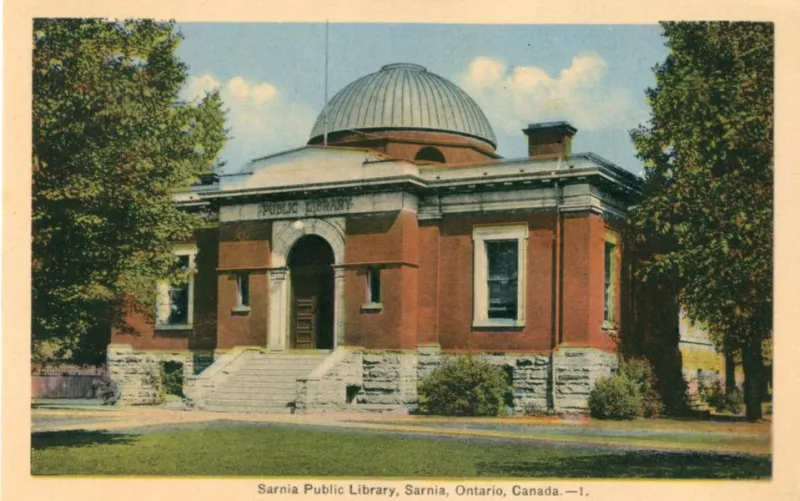
Photo: PECO: Photogelatine Engraving Co. Ltd., CC0, via Wikimedia Commons
It fit in your wallet right next to your school ID and cost absolutely nothing to obtain. The public library card was, for most of the 20th century, one of the great quiet bargains in American life — a civic gift that most people used without fully appreciating. With it, you could borrow novels, reference books, vinyl records, 16mm films, newspapers from a dozen cities, and the undivided attention of a trained librarian who could find almost anything you needed to know.
None of it cost a dime beyond the taxes that funded the building.
Today, accessing roughly the same spread of content requires a stack of monthly subscriptions that, added together, can exceed what many Americans once paid for a car. The delivery got faster. The selection got broader. And somehow, the bill arrived anyway.
What a Library Actually Was
The American public library system reached its golden era somewhere in the mid-20th century, after Andrew Carnegie's construction grants had seeded thousands of buildings across the country and before the internet reframed what information access even meant. By the 1950s and 1960s, a well-funded municipal library was a genuinely remarkable institution.
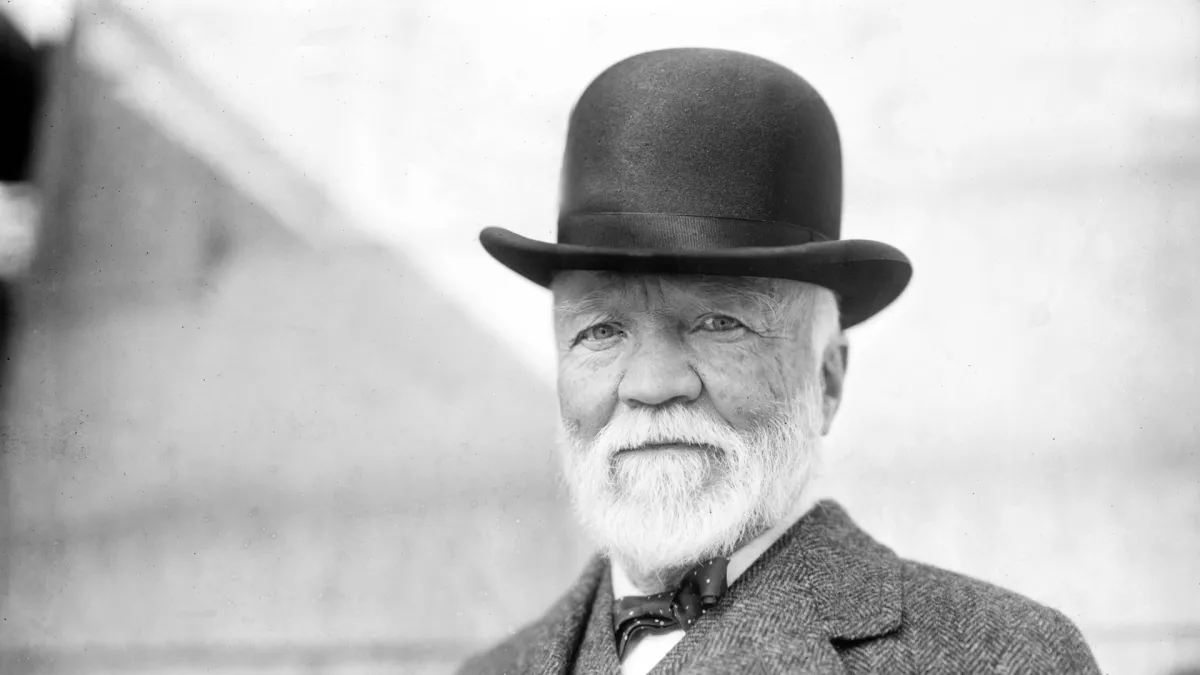 Photo: Andrew Carnegie, via assets.editorial.aetnd.com
The book collection was the obvious draw, but it was only the beginning. Most libraries of any size maintained periodical rooms with current and archived newspapers and magazines — local papers, national publications, trade journals. If you wanted to read what was happening in a city three states away, the library had it. Reference librarians were, in a real sense, human search engines: trained professionals whose entire job was to help you locate information you couldn't find on your own.
Many libraries circulated vinyl records through their music collections — a service that let working-class families access classical recordings, jazz albums, and folk music that they couldn't afford to buy. Film collections, available on reel or later on VHS, brought foreign cinema and documentary work to communities that had no other way to see it. Some branches even lent out art prints, seeds for home gardens, and tools.
And crucially, all of it was equally available to everyone. The factory worker and the professor had the same library card. The kid from the poor side of town could read the same books as the kid from the nice neighborhood. That democratic quality was baked into the institution's design from the beginning.
The Subscription Economy Moves In
The erosion of the library's role as America's primary content gateway happened in waves, each one tied to a new technology.
Cable television in the 1980s began pulling entertainment away from communal or free sources and toward paid monthly services. VHS rental stores drew film borrowing away from library collections. The internet in the 1990s started fragmenting the information landscape in ways that made the library's physical holdings feel slower than they once had.
But the decisive break came in the 2010s, when streaming platforms restructured the entire logic of content access. Netflix shifted from a DVD-by-mail service to a streaming platform and triggered a cascade. Spotify changed how music was consumed. Amazon built a reading subscription on top of its retail empire. Audible turned audiobooks into a monthly membership. Apple, Disney, HBO, Peacock, Paramount — each one arrived with its own fee and its own exclusive content designed to make the subscription feel non-negotiable.
The result, measured in household budgets, is significant. A 2023 analysis by Forbes found that the average American household spent over $1,000 annually on streaming subscriptions alone — and that figure doesn't include music services, digital news subscriptions, or audiobook platforms. Add those in and the total climbs considerably. Many households are spending $100 to $150 per month on content access, which is a car payment by another name.
What the Library Still Does — and What It Can't
It's worth being clear: the public library hasn't disappeared, and in many communities it remains an extraordinary resource. Modern libraries have adapted in genuinely impressive ways. Most now offer digital borrowing through platforms like Libby and OverDrive, giving cardholders access to e-books and audiobooks at no cost. Many provide free access to streaming services, digital magazine archives, and research databases that would cost hundreds of dollars to access individually. Some offer Wi-Fi hotspot lending, 3D printers, recording studios, and coding workshops.
For people who use them, libraries remain one of the best financial deals in American civic life.
But usage has shifted. Foot traffic at many public libraries declined through the 2010s, and surveys consistently show that younger Americans are less likely to hold an active library card than their parents were. The convenience of instant digital access — even paid access — has quietly displaced the habit of library use for millions of households that could genuinely benefit from the free alternative.
There's also a content problem the library can't fully solve. The most culturally dominant entertainment — the shows everyone is talking about, the albums that just dropped, the exclusive podcast series — exists only on proprietary platforms. The library can't carry it. If you want to participate in the current cultural conversation, you increasingly have to pay for the platforms that host it. The library can give you access to the whole 20th century; it can't always give you last Tuesday.
Informed, or Just Billed?
Here's the question worth sitting with: has the subscription economy actually made Americans more informed, more culturally engaged, or more intellectually enriched than the library card era produced?
The honest answer is complicated. Access to information has genuinely expanded in remarkable ways. A curious person with a smartphone and a few subscriptions can reach scholarship, journalism, documentary film, and global literature that would have required a university library card to access in 1975. That's real.
But the old library model offered something the subscription economy doesn't: a guided, curated, expert-assisted experience. The reference librarian who helped you find what you were looking for — and occasionally suggested something you didn't know you needed — was a form of intellectual infrastructure. The algorithm that recommends your next watch based on your viewing history is not the same thing, even when it's useful.
And there's the equity dimension that's easy to overlook. The library card was free to everyone. The subscription economy is not. A household that can't comfortably absorb $100 a month in content fees is excluded from full participation in the current information landscape in ways that would have been unthinkable when the library was the primary gateway.
The Bargain We Didn't Know We Were Giving Up
Nobody made a deliberate decision to replace the public library with a stack of monthly charges. It happened incrementally, one convenient new service at a time, each one offering something the library genuinely couldn't match in speed or exclusivity.
But the cumulative result is a country that now pays, collectively, billions of dollars per year for access to content that a civic institution once provided for free — and that many Americans still could access for free, if they remembered the card in their wallet.
The library is still there. It's still free. It still knows things you need to know.
Most of us just forgot to go back.