When the Field Was Free: The Disappearance of the Pickup Game and the Rise of the $10,000 Youth Athlete

Photo: Dvermeirre, CC BY-SA 4.0, via Wikimedia Commons
Sometime in the 1970s, in a vacant lot somewhere in suburban America, two kids picked teams for a baseball game by alternating hands up a bat until somebody's fist reached the top. The winner chose first. Nobody's parent was watching. Nobody was filming. There was no registration fee, no waiver to sign, no coach with a clipboard. There was just a ball, a bat, some bases improvised from whatever was nearby, and an afternoon that stretched out like it would never end.
That game — casual, self-organized, completely free — was how most American kids played sports for most of American history. And it has very nearly disappeared.
In its place stands a $19 billion youth sports industry built on travel teams, private coaching, tournament entry fees, specialized training facilities, and equipment that costs more than some families' monthly grocery budgets. The pickup game didn't just fade out. It got professionalized into something almost unrecognizable.
The Afternoon That Used to Belong to Kids
For the better part of the 20th century, youth sports in America operated on a simple principle: kids played, adults mostly stayed out of it. Little League Baseball was founded in 1939 and represented one of the earliest organized frameworks for youth athletics, but even within that structure, the emphasis was on participation and fun over performance and advancement.
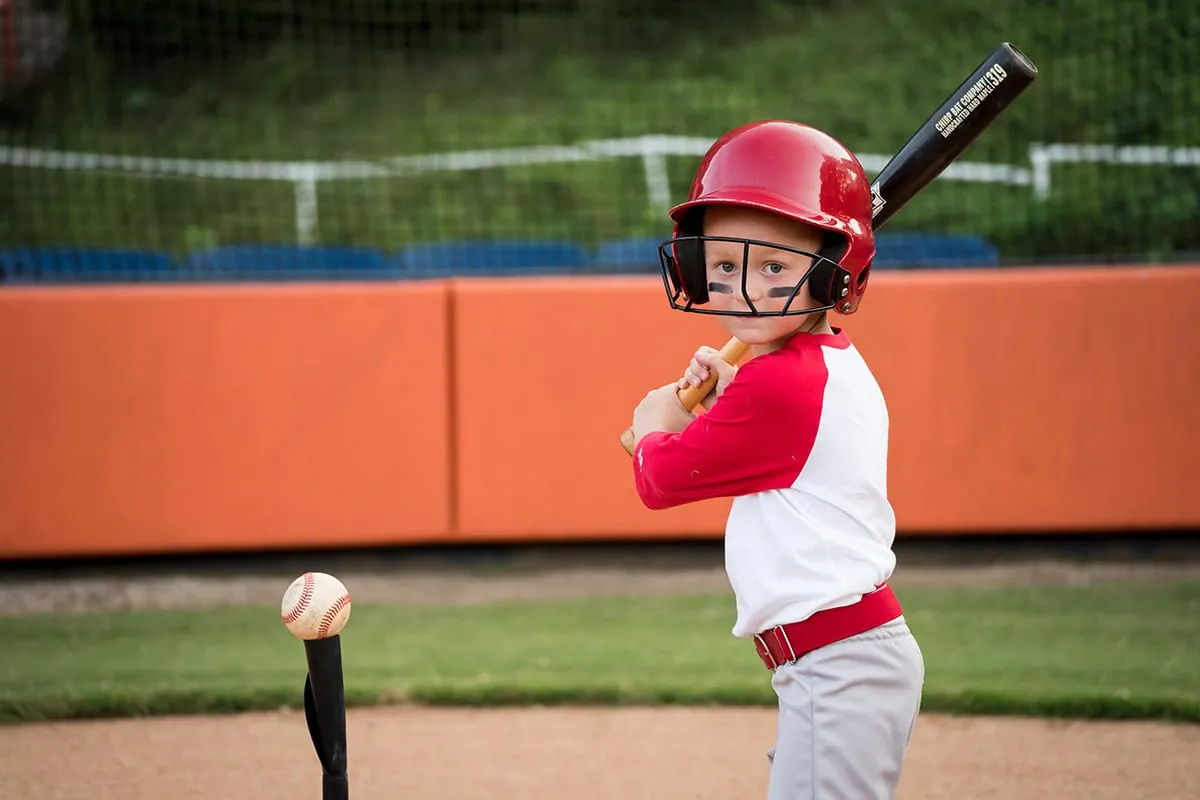 Photo: Little League Baseball, via tamron-americas.com
Outside of organized leagues, the default mode of play was entirely informal. Neighborhood kids gathered after school, on weekends, and through the long unscheduled weeks of summer to play whatever they felt like — baseball, football, basketball, kickball, stickball, street hockey. The rules were negotiated on the spot. Disputes were settled by argument, coin toss, or a do-over. The best player didn't necessarily get to bat first. The kid who owned the ball had more leverage than anyone.
It was messy, occasionally unfair, and completely self-regulating. And research now suggests it was also deeply valuable — building conflict resolution skills, creativity, physical literacy, and intrinsic motivation in ways that structured adult-run programs often don't replicate.
When Adults Showed Up and Changed Everything
The shift toward organized youth sports accelerated through the 1980s and 1990s, driven by a combination of genuine good intentions and structural changes in American life. Suburbs spread out in ways that made neighborhoods less walkable and peer groups less naturally concentrated. Parents became more anxious about unsupervised outdoor time. The rise of dual-income households meant that after-school hours needed structure. And organized sports offered a solution: a safe, supervised environment with clear schedules.
At the same time, the cultural narrative around athletic development began to shift. The idea that talent could be identified early and systematically developed — that the right coaching, the right program, the right exposure at age eight could put a child on a path toward a college scholarship or even a professional career — took hold in ways that fundamentally changed how parents thought about youth sports.
Travel teams emerged as the premium tier of this new system. Unlike local recreational leagues, travel teams recruited selectively, practiced more intensively, and competed regionally or nationally. They also cost significantly more. By the 2000s, travel sports had become a status marker in many American communities, and the pressure to make the team — and keep up with the expenses — was real.
The Price Tag That Grew Up With the Sport
The numbers today are striking. A family with a child on a competitive travel soccer team can expect to spend between $3,000 and $10,000 per year on registration fees, tournament costs, travel, equipment, and coaching. Elite youth hockey — with its ice time, equipment, and multi-state tournament schedules — can run $15,000 to $20,000 annually. Gymnastics, swimming, and tennis at competitive levels carry similar burdens.
And these costs compound over years. A child who enters a travel sports program at age eight and continues through high school has parents who may have spent $50,000 to $100,000 or more on athletic development before a single college coach has seen them play.
The financial barrier this creates is not subtle. Youth sports participation has become increasingly stratified by income. Low-income kids — who were once just as likely to be the best players on the neighborhood lot — are now systematically underrepresented in the travel and elite tiers of youth athletics. The Aspen Institute's Project Play has documented this shift extensively, noting that kids from higher-income families are nearly twice as likely to play organized sports as those from lower-income households.
 Photo: Aspen Institute, via media-content.aspeninstitute.org
The pickup game was, among other things, a great equalizer. The travel team is not.
What Early Specialization Actually Delivers
The justification for all of this investment — the early specialization, the year-round training, the elite coaching — is usually some version of competitive advantage. Start earlier, train harder, and your child will be better positioned for a scholarship, a roster spot, a career.
The evidence, however, is not particularly supportive of this logic. The American Academy of Pediatrics and numerous sports medicine organizations have warned consistently that early specialization increases injury risk, accelerates burnout, and often produces worse long-term athletic outcomes than a multi-sport, late-specialization approach.
 Photo: American Academy of Pediatrics, via m.media-amazon.com
The majority of elite professional athletes played multiple sports well into their teens. Many credit the cross-training and mental variety of multi-sport childhoods as central to their development. Meanwhile, youth sports dropout rates are striking: roughly 70% of American kids quit organized sports by age 13, citing lack of fun as the primary reason.
The system designed to develop elite athletes is, in many cases, producing burned-out twelve-year-olds.
The Field Is Still There
Here's what's interesting: the vacant lot hasn't gone anywhere. The park at the end of the street still exists. The basketball hoop in the driveway still works. The basic ingredients of a pickup game — a ball, some kids, some unscheduled time — are still available to most American families.
What's changed is the permission structure around them. In a culture that has decided youth sports must be organized, coached, tracked, and optimized, the simple act of letting kids go play without a plan can feel almost countercultural.
But some families and communities are deliberately pushing back — embracing multi-sport participation, delaying specialization, choosing recreational leagues over travel programs, and protecting unstructured play time as something worth defending.
None of that requires spending $10,000 a year. It just requires remembering what the pickup game actually taught: that kids, left to figure it out themselves, usually do.