Dirt Under Your Fingernails and a Pencil Behind Your Ear: The Family Farm Before Agriculture Went Corporate
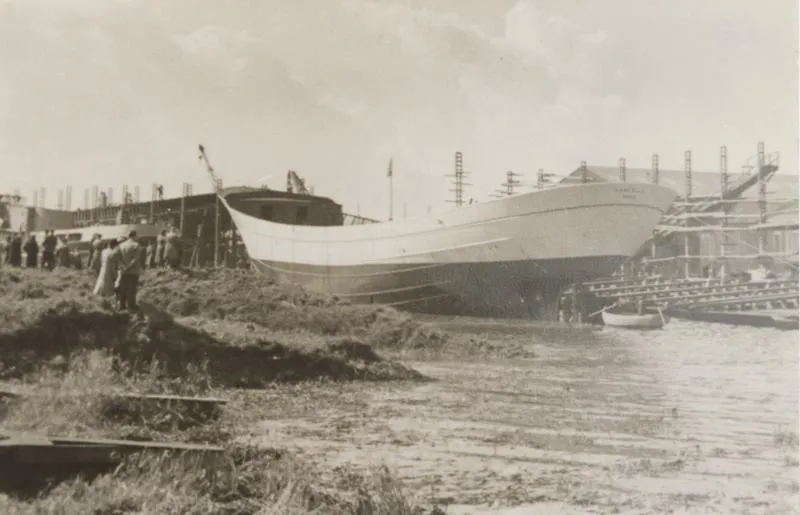
Photo: East Riding Archives, No restrictions, via Wikimedia Commons
Picture a kitchen table in rural Iowa, sometime around 1955. A farmer sits with a cup of coffee, a dog-eared almanac, and a composition notebook where he's been tracking his yields by hand for fifteen years. He knows his 80 acres the way you know your own house — which corner floods in a wet spring, which field grows sweet corn better than anything, which neighbor will trade labor for labor come harvest week.
That notebook was his data system. That neighbor was his supply chain. And somehow, it worked.
Fast forward to today, and the average American farm covers over 440 acres. It runs GPS-guided tractors, subscribes to satellite crop monitoring services, carries hundreds of thousands of dollars in equipment loans, and depends on a web of federal subsidies just to stay solvent. The pencil behind the ear has been replaced by a tablet running precision agriculture software. The neighbor who helped with the harvest has been replaced by a hired crew and a combine that costs more than a house.
Something enormous changed between that kitchen table and this one. And it's worth understanding what — and what it cost.
The Scale of What Used to Be Normal
In 1935, the US had nearly 6.8 million farms. The average size was around 155 acres. Most of those operations were genuinely family-run — meaning the family did the work, made the decisions, absorbed the losses, and pocketed whatever profit remained. They grew a mix of crops, often kept livestock, maintained a kitchen garden, and sold locally or at regional markets.
Overhead was real but manageable. A horse or two, some hand tools, a modest barn. Debt existed, but it was generally tied to land, not to $500,000 combines or $300-per-acre chemical inputs. Many farm families were land-rich and cash-poor, but they were also largely self-sufficient in ways that made that imbalance livable.
By 2022, the USDA counted fewer than 2 million farms in the United States. And while that sounds like a lot, the majority of American food production is now concentrated in a relatively small number of very large operations. The small family farm hasn't just declined — it's been largely absorbed, consolidated, or simply abandoned.
How Efficiency Became the Only Metric That Mattered
The transformation didn't happen overnight, and it wasn't accidental. After World War II, American agriculture entered a period of rapid mechanization. Tractors replaced horses. Chemical fertilizers and pesticides, developed partly from wartime industrial processes, flooded the market. Hybrid seeds promised higher yields. The message from agricultural extension programs, equipment manufacturers, and lenders was consistent: get big or get out.
Secretary of Agriculture Earl Butz made that philosophy explicit in the 1970s when he famously told American farmers to plant "fencerow to fencerow" and adapt to industrial scale or step aside. Federal farm policy shifted away from supply management — which had kept prices stable by limiting overproduction — toward maximum output, which drove commodity prices down and made small-scale farming economically precarious.
To survive, farmers had to grow. To grow, they had to borrow. And once you're borrowing at scale, you're no longer running a lifestyle — you're running a business with all the pressure that implies.
The Equipment Debt That Changed Everything
Nothing illustrates the transformation of American farming quite like the cost of equipment. A new John Deere 8R tractor today lists for around $350,000 to $500,000. A modern combine harvester can run $750,000 or more. Precision planting equipment, GPS systems, grain storage infrastructure — the capital requirements of a competitive modern farm can easily exceed $1 million before you've turned a single acre.
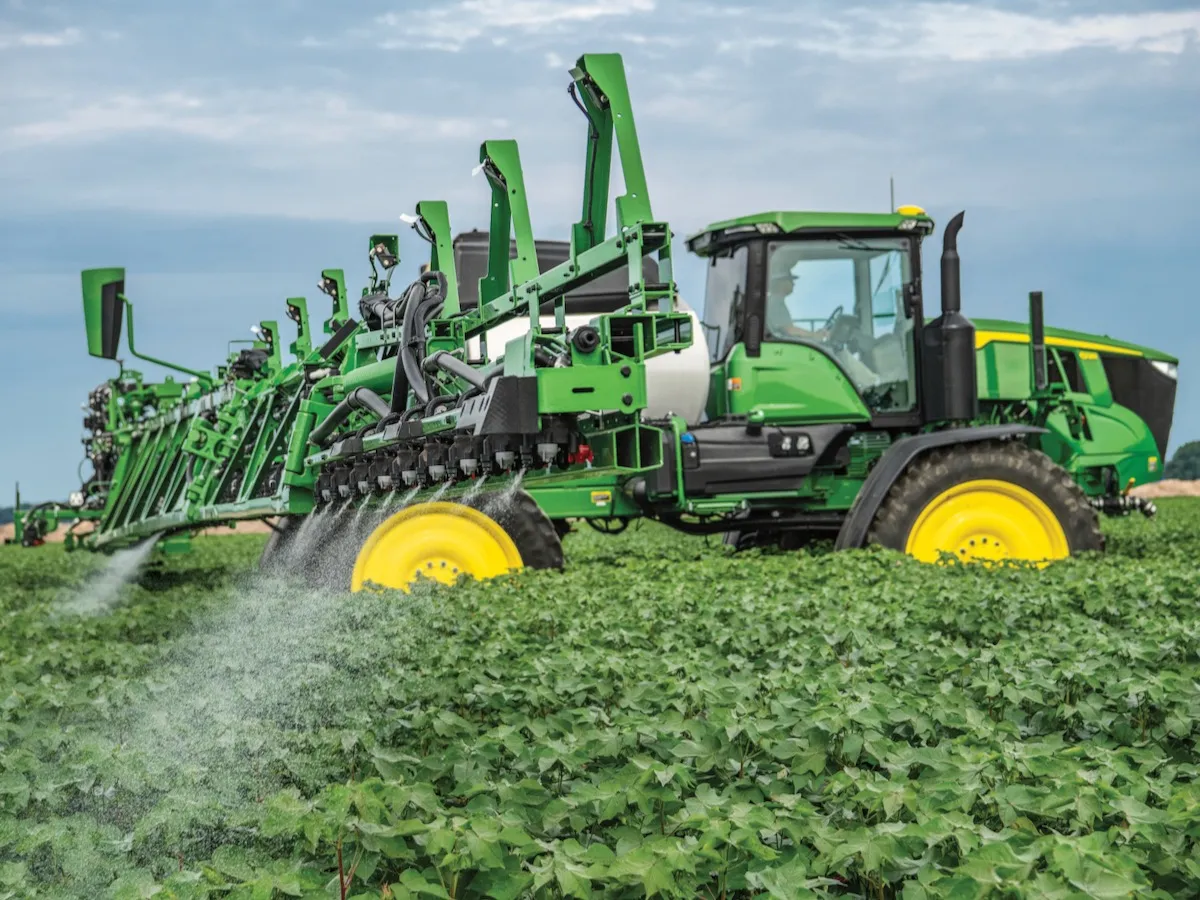 Photo: John Deere, via static.grainews.ca
The family farmer of 1955 might have had $2,000 to $5,000 tied up in equipment — significant, but not existential. Today's farmer often carries equipment debt that would make a small business owner flinch. A single bad harvest, a commodity price collapse, or an unexpected equipment failure can cascade into financial crisis in ways that simply weren't possible when the overhead was lower.
And yet, paradoxically, the farmers carrying all this debt are often earning less per unit of output than their grandparents did. Commodity prices, adjusted for inflation, have trended downward for decades. The efficiency gains of industrial agriculture have largely been passed on to food processors, retailers, and consumers — not to the farmers themselves.
What the Ledger Didn't Capture
The handwritten ledger on that 1955 kitchen table didn't account for everything, of course. Small-scale farming was hard, physically demanding work with no guaranteed income and no safety net beyond community and savings. Romanticizing it entirely would be dishonest.
But what that ledger also didn't include was the web of non-financial value that surrounded the family farm: the community ties, the generational knowledge of specific land, the biodiversity of mixed-crop operations, the local food systems that kept money circulating in rural economies. When farms consolidated and rural populations declined, all of that went with them.
Small towns across the Midwest and South that once existed to serve surrounding farm communities — the grain elevator, the implement dealer, the diner where farmers ate breakfast — hollowed out as the farms got bigger and needed fewer people. The economic logic of consolidation was sound. The human geography it created was bleak.
The 2% Who Remain
Fewer than 2% of Americans now farm for a living. For those who do, the job looks almost nothing like it did for their great-grandparents. It requires agronomic knowledge, financial acumen, technology fluency, and a tolerance for risk that most people would find unmanageable.
And yet farming persists, and in some corners, it's evolving in interesting directions. The local food movement, farmers markets, community-supported agriculture programs, and a new generation of small-scale producers are carving out space outside the industrial model. They're not going back to the 1955 kitchen table — but they're asking some of the same questions that farmer asked with his pencil and his almanac.
How do you know this land? What does it actually need? And is there a way to make this work without betting everything on the next harvest?
Those questions, at least, haven't changed.