When Summer Meant Freedom: The Childhood That Vanished Between Dinner and Dark
The Universal Childhood Contract
Every kid in 1970s America knew the deal: "Be home when the streetlights come on." That was it. No GPS tracking, no scheduled check-ins, no playdates arranged weeks in advance. Just the simple understanding that childhood happened in the space between breakfast and dinner, and parents would see you when darkness fell.
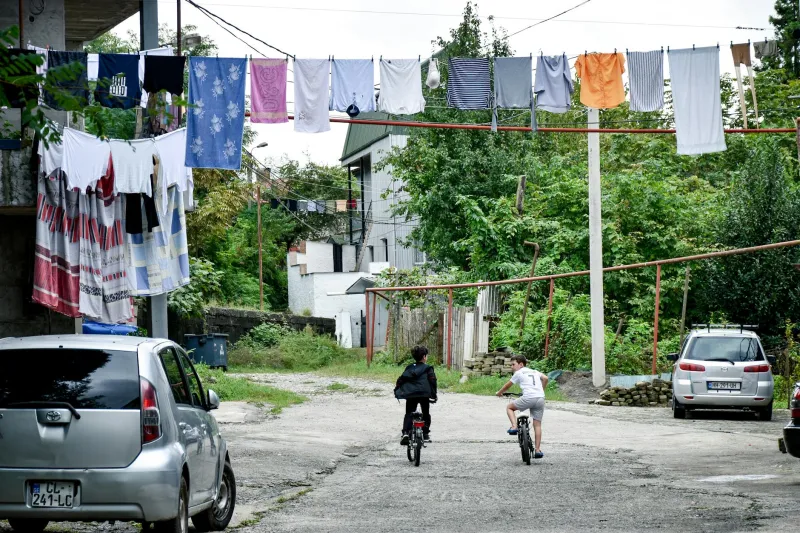
Summer days stretched endlessly, filled with whatever kids could imagine. They built forts in vacant lots, rode bikes to parts of town their parents had never seen, and organized elaborate games that lasted for hours without any adult supervision. The neighborhood was their territory, and they claimed every inch of it.
This wasn't neglect — it was normal. Parents expected their children to entertain themselves, solve their own problems, and return home with scraped knees and stories of adventure. The idea that kids needed constant supervision or structured activities would have seemed both impossible and unnecessary.
The Geography of Freedom
Children's independence had real geographic boundaries that seem shocking by today's standards. Studies from the 1970s show that the average 8-year-old had a "home range" — the area they could explore unsupervised — of about six miles. They walked or biked to friends' houses across town, spent afternoons at public pools, and knew every shortcut through their neighborhood.
Compare that to today: the average child's unsupervised range has shrunk to less than half a mile from home. Many kids can't walk to the end of their own block without parental oversight. What once felt like a vast territory of childhood exploration has contracted to the size of a few suburban streets.
The physical infrastructure supported this independence. Neighborhoods were designed for walking, with sidewalks connecting schools, parks, and shopping areas. Public spaces — playgrounds, ball fields, swimming holes — were genuinely public, used by children without adult gatekeepers or organized programming.
The Rhythm of Unstructured Days
Summer vacation meant exactly that — vacation from structure. Kids woke up without alarm clocks, ate cereal while watching cartoons, then headed outside to see what the day might bring. Plans were made on the spot: "Let's go to the creek," or "I heard there's a pickup baseball game at the school."
The social dynamics were entirely peer-driven. Children formed their own groups, negotiated their own conflicts, and created elaborate social hierarchies without adult intervention. They learned to include younger kids, deal with bullies, and organize activities that could accommodate different ages and interests.
Boredom was a regular part of childhood, and kids were expected to solve it themselves. No parent felt obligated to provide entertainment when a child complained of having nothing to do. Boredom led to creativity — building tree houses, inventing games, exploring places that seemed mysterious and possibly forbidden.
When Danger Was Part of Growing Up
Parents in previous generations accepted that childhood involved some level of risk. Kids climbed trees knowing they might fall, rode bikes without helmets, and played in construction sites and abandoned buildings. Scraped knees, minor cuts, and the occasional broken bone were considered normal parts of growing up.
This wasn't reckless parenting — it was a different calculation of risk and benefit. Parents believed that children needed to test their limits, make mistakes, and learn to assess danger for themselves. The goal was raising independent adults, not protecting children from every possible harm.
Playgrounds reflected this philosophy. Equipment was made of metal and wood, built over concrete or packed dirt. Monkey bars were high, slides were steep, and merry-go-rounds spun fast enough to throw kids off if they weren't careful. The message was clear: pay attention, hold on tight, and learn from your mistakes.
The Transformation
The shift toward supervised childhood didn't happen overnight. It began in the 1980s with high-profile cases of child abduction that, while statistically rare, created widespread fear about "stranger danger." Media coverage amplified these fears, making parents believe that unsupervised children were in constant peril.
Legal and cultural changes followed. Schools began requiring signed permission slips for activities that once needed no authorization. Playgrounds were redesigned with safety equipment that eliminated most physical challenges. Neighborhoods that once felt like extended family networks began to feel like collections of isolated households.
The rise of dual-income families created practical challenges for unsupervised play. With both parents working, many children needed structured care during summer months. What began as necessity — organized camps and activities for working parents — gradually became the norm for all families.
The Scheduled Childhood
Today's children experience summer as a series of organized activities: camp, sports leagues, music lessons, tutoring sessions. Their calendars look like those of busy executives, with every hour accounted for and every activity supervised by trained adults.
The average American child now spends less than 30 minutes per day in unstructured outdoor play, compared to more than three hours for children in the 1970s. Free time has been replaced by screen time, and independence has been traded for safety and enrichment.
Modern parents invest enormous energy in coordinating playdates, driving to activities, and ensuring their children's schedules are optimized for development and achievement. What once happened naturally through neighborhood interactions now requires careful planning and adult oversight.
The Digital Leash
Technology has fundamentally changed the parent-child relationship during childhood adventures. GPS tracking apps allow parents to monitor their children's location in real-time. Cell phones create expectations of constant contact. The freedom to disappear until dinner has been replaced by the obligation to remain reachable at all times.
Social media adds another layer of supervision. Children's activities are documented and shared, creating pressure for every experience to be worthy of posting. The private world of childhood — with its secret places and unwitnessed adventures — has largely disappeared.
What We've Gained and Lost
Modern childhood offers advantages that previous generations couldn't imagine. Children have access to diverse activities, expert instruction, and educational opportunities that can develop talents and interests in sophisticated ways. Organized sports provide better coaching and competition than pickup games ever could.
Safety improvements are real, even if the perception of danger has been exaggerated. Better playground equipment prevents serious injuries. Increased awareness of child abuse has created protection systems that didn't exist before. Background checks for youth workers provide security that was once taken on faith.
But something irreplaceable has been lost. The confidence that comes from navigating the world independently, the creativity born from unstructured time, and the resilience developed through unsupervised problem-solving — these qualities are harder to develop in today's managed childhood.
The Independence Paradox
We now have 18-year-olds who have never walked alone to a store, never organized their own activities, and never spent an unscheduled afternoon exploring their neighborhood. They arrive at college with impressive résumés but often struggle with the independence that their parents' generation took for granted.
The irony is striking: in our effort to prepare children for success, we may have eliminated many of the experiences that once built the independence and resilience that success requires. We've optimized childhood for safety and achievement while minimizing the very experiences that once taught children how to be capable adults.
The streetlights still come on every evening, but most kids are already inside, finishing homework or attending evening activities. The simple childhood contract — be home when dark — has been replaced by complex schedules and constant supervision. Whether this represents progress or loss depends on what we believe childhood is supposed to accomplish.