Two Minutes and You're Hired: When Getting a Job Meant Showing Up and Shaking Hands

The Five-Minute Career Launch
In 1975, Tom Bradley walked into a Ford dealership in Detroit, asked if they were hiring, and started selling cars the next Monday. No resume. No background check. No personality assessment to determine if he was "culture fit." Just a brief chat with the sales manager about his work ethic and a handshake that sealed the deal.
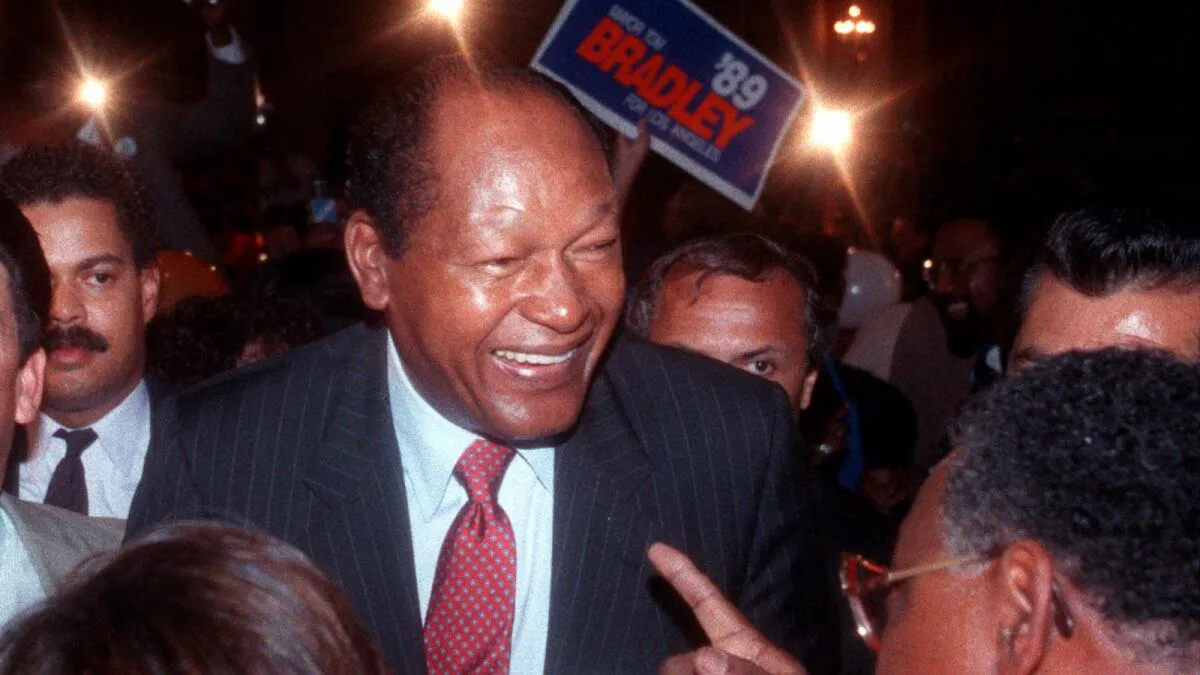 Photo: Tom Bradley, via ca-times.brightspotcdn.com
Bradley wasn't unusual. For most of American history, getting hired meant showing up, proving you could do the work, and earning trust through performance rather than predictions. The entire hiring process often lasted less time than today's candidates spend filling out a single online application.
When Trust Came First
Before the 1980s, most American employers operated on a simple principle: hire decent people and train them to do the job. Manufacturing plants, retail stores, and offices routinely hired workers based on brief conversations, personal referrals, or simply walking through the door at the right time.
The typical "interview" lasted 10-20 minutes. Managers asked basic questions about availability, work history, and reliability. They looked for signs of character — punctuality, politeness, willingness to learn — rather than trying to predict future performance through elaborate testing.
Many workers found jobs through networks of family, friends, and neighbors. A recommendation from someone already employed carried enormous weight. If your brother-in-law vouched for your work ethic, that was often enough to get you hired on the spot.
The Algorithm Takes Over
Today's job seekers navigate a completely different landscape. The average corporate position receives 250 applications. Applicant tracking systems automatically reject 75% of candidates before any human sees their resume. Those who survive the digital filter face multiple rounds of interviews that can stretch across months.
Modern hiring processes often include:
- Online applications requiring 30-60 minutes to complete
- Phone screenings with HR representatives
- Skills assessments and personality tests
- Video interviews with hiring managers
- Panel interviews with potential teammates
- Background checks and reference verification
- Final interviews with senior leadership
What once took an afternoon now consumes weeks or months. Candidates report interviewing at companies six, eight, even ten times for positions that previous generations would have secured with a single conversation.
The Trust Deficit
This transformation reflects a fundamental shift in how American employers view workers. The handshake era assumed most people were honest, capable, and trainable. Today's process assumes the opposite — that candidates must prove their worth through extensive vetting before earning the privilege of employment.
Corporate America became obsessed with "reducing hiring risk" through data and testing. Companies invested millions in software that promised to identify ideal candidates through algorithmic analysis. The result? Hiring processes that filter out perfectly qualified people while failing to predict actual job performance any better than the old gut-check method.
The Hidden Costs of Complexity
This elaborate screening system creates costs that extend far beyond HR departments. Qualified workers remain unemployed longer, burning through savings while navigating bureaucratic hiring gauntlets. Companies miss out on good employees who get frustrated and withdraw from lengthy processes.
The economic impact is staggering. Extended hiring timelines mean positions stay vacant longer, reducing productivity and forcing existing employees to cover extra work. Some estimates suggest the modern hiring process costs American businesses over $15 billion annually in lost productivity and inflated HR overhead.
When Simple Worked Better
The irony is that simpler hiring often produced better results. Workers hired through personal networks and brief interviews frequently stayed with companies for decades. They developed loyalty partly because someone had shown faith in them from the start.
Modern hiring's emphasis on credentials over character has created a workforce that job-hops frequently, partly because the impersonal screening process builds no emotional connection between worker and employer. When getting hired feels like surviving an ordeal rather than joining a team, long-term commitment becomes less likely.
The Human Element We Lost
Perhaps the biggest casualty of modern hiring is the human connection that once defined American workplaces. When managers hired people they'd actually met and talked with, they invested in their success. New employees weren't just "human resources" — they were individuals someone had personally chosen to join the team.
Today's algorithm-driven process treats people like data points to be optimized rather than humans with potential to grow and contribute. We've gained efficiency in processing applications but lost the intuition and personal judgment that often identified the best candidates — the ones who might not test perfectly but would work hard and fit well with the team.
The two-minute handshake hire wasn't just faster — it was more human. And in many ways, it worked better than the exhausting gauntlet we've created to replace it.