When Flying Meant Putting On Your Best Suit — How Air Travel Went From Luxury to Survival
Step onto any commercial flight today and you'll see passengers in flip-flops, tank tops, and yoga pants cramming themselves into seats that seem designed for children. It's hard to imagine a time when boarding a plane required the same wardrobe consideration as attending a wedding — but that's exactly how Americans approached air travel in 1965.
Back then, flying wasn't just transportation. It was theater.
The Golden Age Had Actual Golden Standards
In the mid-1960s, commercial aviation operated under strict government regulation that treated airlines more like public utilities than competitive businesses. The Civil Aeronautics Board controlled everything from ticket prices to flight routes, which meant airlines couldn't compete on cost. Instead, they competed on service — and the results were extraordinary.
Passengers dressed for the occasion because flying felt like an occasion. Men wore suits and ties. Women donned their finest dresses, complete with gloves and hats. Airlines enforced dress codes, and gate agents could actually deny boarding to passengers who didn't meet appearance standards. The idea of showing up to a flight in sweatpants would have been as shocking as wearing pajamas to church.
The aircraft themselves reflected this elevated experience. Seats were wider — typically 21 inches compared to today's 17-18 inches. Legroom stretched 34-37 inches, giving passengers space to actually cross their legs comfortably. First-class cabins featured individual seats that could recline nearly flat, decades before "lie-flat" became a marketing buzzword.
When Meals Actually Mattered
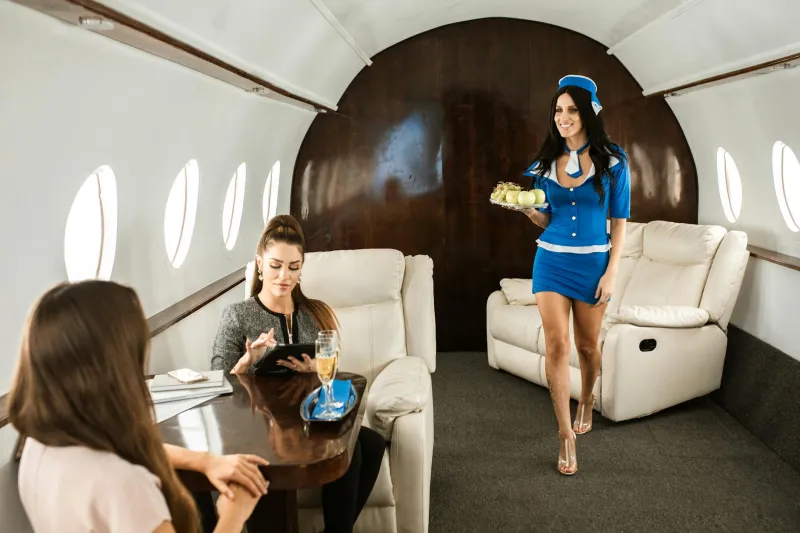
Dinner service in 1965 looked nothing like today's shrink-wrapped sandwiches. Airlines served multi-course meals on real china with actual silverware. Flight attendants — then called stewardesses — carved roast beef tableside and poured wine from glass bottles. Even coach passengers received hot meals that rivaled what you'd find in upscale restaurants.
TWA's Ambassador Service featured lobster thermidor and prime rib. Pan Am's first-class passengers dined on Maxim's of Paris cuisine at 35,000 feet. These weren't airline meals as we know them today — they were genuine culinary experiences designed to make passengers feel pampered throughout their journey.
The service extended beyond food. Flight attendants maintained passenger-to-crew ratios that seem impossible by today's standards. They had time to engage with travelers, assist with coat storage, and ensure everyone felt personally attended to throughout the flight.
The Price of Exclusivity
This luxury came with a catch that would shock modern travelers: the cost. A round-trip flight from New York to Los Angeles in 1965 cost about $300 — which equals roughly $2,800 in today's money. That same route now regularly sells for under $400, making it seven times more affordable in real terms.
The high prices meant flying remained exclusive. Only about 20% of Americans had ever been on a commercial flight by the mid-1960s. Air travel was reserved for business executives, wealthy families, and special occasions. The average American was more likely to take a cross-country train or drive than book a flight.
Everything Changed in 1978
The Airline Deregulation Act of 1978 shattered this carefully controlled system. Suddenly, airlines could set their own prices, choose their own routes, and compete however they saw fit. The immediate result was a price war that made flying accessible to millions of Americans who had never considered it an option.
But accessibility came with tradeoffs. Airlines discovered they could pack more passengers into planes by shrinking seats and reducing legroom. Meal service became an expense to cut rather than a service to celebrate. Dress codes disappeared as airlines prioritized filling seats over maintaining atmosphere.
The transformation was swift and dramatic. By the 1980s, the golden age of air travel was already becoming a nostalgic memory as airlines raced to offer the lowest fares possible.
The Modern Reality Check
Today's flying experience would bewilder a 1965 passenger. We pay extra fees for checked bags, seat selection, and even carry-on luggage on some airlines. The idea of a free meal seems quaint when airlines charge $15 for a small bag of snacks.
Yet we've gained something powerful in return: accessibility. Modern Americans take weekend trips to cities their grandparents might have visited once in a lifetime. Business travelers hop between meetings in different time zones as casually as commuting to work. The number of Americans who fly regularly has increased from 20% to over 80%.
Was the Tradeoff Worth It?
The democratization of air travel represents one of the most significant transportation shifts in American history. We traded exclusivity and luxury for affordability and access — and whether that was a good deal depends entirely on your perspective.
If you're cramming into a middle seat on a budget airline, the golden age probably sounds pretty appealing. But if you're someone whose family could never have afforded to fly in 1965, today's system opened up possibilities that simply didn't exist before.
The next time you're wrestling with an overhead bin or paying for a bag of pretzels, remember: you're experiencing the direct result of a choice American society made 45 years ago. We decided that flying for everyone was more important than flying in style for a few.
Whether we chose wisely might depend on how much legroom you have right now.