When Calling Home Meant Waiting Your Turn — How America Shared Phone Lines for Decades
The Ritual of Getting Permission to Call
Picture this: You need to make an important phone call in 1955. You walk to the heavy black rotary phone mounted on your kitchen wall, lift the receiver, and instead of a dial tone, you hear Mrs. Henderson from down the street discussing her bridge club plans. You quietly hang up and wait. This wasn't rudeness—this was reality for millions of Americans living on party lines.
Party lines weren't about celebrations. They were shared telephone circuits that connected multiple households to save on infrastructure costs. At their peak in the 1950s, over half of American homes shared their phone service with neighbors, creating an entirely different culture around communication that would seem alien today.
When Privacy Was a Luxury
On a typical party line, anywhere from two to twenty households shared the same circuit. Each home had a distinct ring pattern—maybe two long rings and a short one for the Johnsons, or three short bursts for the family next door. Everyone could hear all the rings, but you were only supposed to answer your own.
The reality was messier. Neighbors routinely eavesdropped on conversations, a practice so common it had its own name: "rubbernecking." Some people made it a hobby, quietly lifting their receivers to catch up on local gossip. Others would brazenly interrupt ongoing calls to ask for the line.
Phone etiquette guides from the era read like diplomatic manuals. "Keep conversations brief and courteous," advised one 1940s pamphlet. "Remember, your neighbors are waiting." The recommended maximum for social calls was three minutes during peak hours.
The Human Network
Before direct dialing became widespread in the 1960s, most calls required an operator's assistance. Making a long-distance call was an event that required planning and preparation. You'd tell the operator the city and person you wanted to reach, then wait while she manually connected circuits across the country.
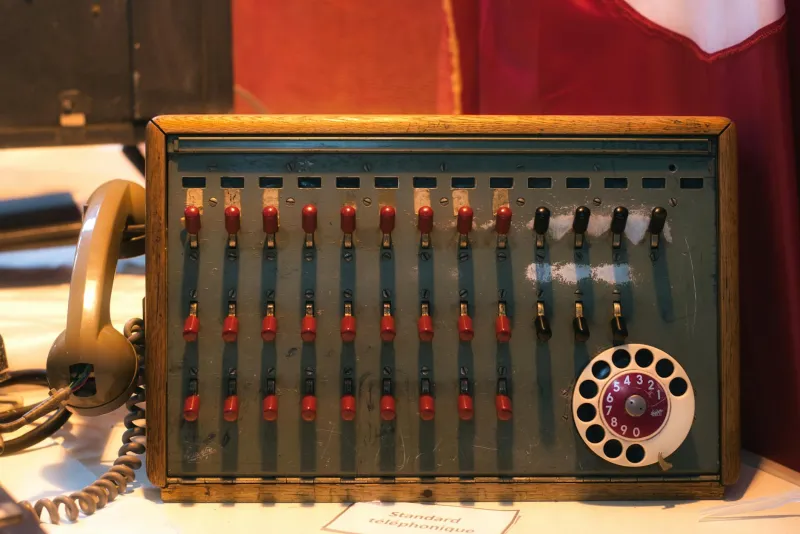
"Number please," became one of the most recognizable phrases in America. Operators—almost exclusively women—sat at massive switchboards, plugging and unplugging cables to connect calls. They knew their communities intimately, often serving as informal directory services. "Can you connect me to the doctor?" was a perfectly reasonable request, even without knowing the specific number.
Long-distance calls were expensive enough to require budgeting. A three-minute call from New York to Los Angeles in 1950 cost $2.50—equivalent to about $30 today. Families would gather around the phone for rare calls to distant relatives, treating them like special occasions.
The Economics of Connection
The party line system existed because running individual copper wires to every home was prohibitively expensive, especially in rural areas. Phone companies calculated that most people made relatively few calls, so sharing capacity made economic sense. A private line in 1950 might cost $8 per month, while party line service was available for as little as $3.
Rural communities often had the most crowded party lines. In some farming areas, a single line might serve an entire road, creating mini-networks where neighbors coordinated everything from harvest schedules to emergency assistance. These shared lines became social infrastructure, connecting isolated families in ways that went beyond simple communication.
When Calling Became Instant
The transformation happened gradually, then suddenly. Direct dial service expanded throughout the 1960s, eliminating the need for operators on most calls. Private lines became more affordable as technology improved. By 1970, party lines were disappearing from urban areas, though some rural communities kept them into the 1980s.
The shift from party lines to private service happened during the same decades that reshaped American suburbia. As families moved to new developments with underground utilities, they expected—and got—private phone lines as standard. The idea of sharing a phone line with neighbors became as outdated as sharing a well.
From Scarcity to Abundance
Today's communication abundance would boggle a 1950s party line user. We carry devices that can instantly connect us to anyone, anywhere, for essentially no additional cost. A video call to someone on another continent requires no operator, no waiting, and no consideration of our neighbors' needs.
The average American now has access to multiple phone numbers—home, work, and mobile—plus email, text messaging, and dozens of other communication apps. What once required community coordination and careful timing now happens thoughtlessly, hundreds of times per day.
The Lost Art of Shared Resources
Party lines represented something we've largely lost: the necessity of considering others in our daily routines. Using shared communication required patience, courtesy, and community awareness. Neighbors knew each other's voices and family situations in ways that modern privacy makes impossible.
While few would choose to return to the limitations of party line service, something was lost in the transition to unlimited private communication. The forced interactions and shared responsibility created bonds between neighbors that our current communication abundance can't replicate.
The next time you make an instant video call to someone across the world, remember that your grandparents might have had to ask Mrs. Henderson to get off the line first. In less than a human lifetime, we've gone from rationing communication to drowning in it—a transformation as dramatic as any in human history.