When Three Networks Meant Everyone Watched the Same Thing: The Rise and Fall of Shared Television
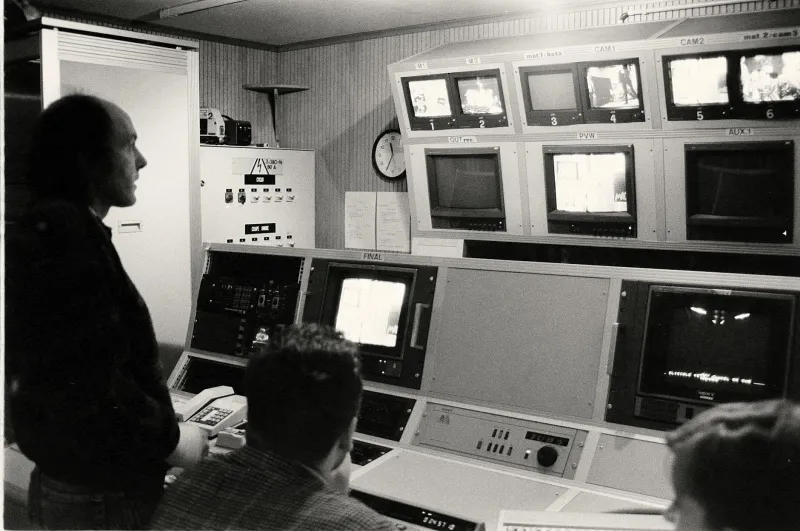
On a Tuesday night in 1975, if you wanted to watch television, you had three options: CBS, NBC, or ABC. That was it. No cable. No remote control. No on-demand menu with 10,000 titles.
You looked at the TV Guide, found what interested you, and watched it when it aired. If you missed it, you missed it. There was no rewatch, no streaming later, no second chance. Millions of Americans watched the same show at the same time, and the next day at work, everyone talked about it.
This wasn't a limitation—it was the entire structure of entertainment. And it worked.
Today, the average American has access to more television and film content than any human could watch in a lifetime. We have Netflix, Hulu, Disney+, Prime Video, Max, Paramount+, Peacock, Apple TV+, and dozens of others. We can watch anything, anytime, on any device. It's an embarrassment of riches.
Yet Americans report higher rates of entertainment dissatisfaction, decision fatigue, and the inability to find something to watch despite having access to virtually everything.
Somewhere between three channels and ten thousand shows, we lost something.
The Three-Network Era
For nearly 30 years, American television operated under a simple constraint: there were only three networks, and they all broadcast the same hours of content to the entire country.
Prime time was 8 PM to 11 PM. The networks scheduled their best programming during those hours. Everyone who watched television watched something from one of those three networks. The audience was massive and unified.
A hit show didn't mean millions of viewers—it meant tens of millions. "The Ed Sullivan Show" regularly drew 50 million viewers. "I Love Lucy" had a 67% audience share. "The Cosby Show" in the 1980s drew 30 million viewers weekly.
These weren't niche audiences. They were cultural events.
The economics were straightforward: networks sold advertising time based on audience size. The larger your audience, the more you could charge advertisers. Competition was fierce, but it was competition for the same limited pool of viewers during the same limited hours.
This created an incentive to make shows that appealed to the broadest possible audience. Lowest common denominator, critics called it. But it also meant that television was a genuinely shared experience. You couldn't opt out of the cultural conversation because there was only one conversation happening.
The Cable Expansion
Cable television began fragmenting the audience in the 1980s and 1990s. Suddenly, there were dozens of channels. Then hundreds. CNN, MTV, HBO, ESPN, Discovery Channel, TLC—each carved out its own niche audience.
This was presented as liberation. More choice! More options! No longer would you be forced to watch what the three networks decided you should watch.
But fragmentation had a cost: the shared cultural moment began to dissolve. If you watched HBO and your friend watched MTV, you weren't watching the same thing anymore. The national conversation splintered into dozens of smaller conversations.
Advertisers adapted by targeting specific demographics rather than broadcasting to everyone. The economics changed. A cable network could succeed with 2 million viewers if they were the right viewers—the ones advertisers wanted to reach.
The Streaming Revolution
Streaming accelerated the fragmentation exponentially.
Netflix launched in 1997 as a mail-order DVD service. By the early 2010s, it was streaming on-demand content. By the 2020s, it had become a media empire producing original programming that rivaled traditional networks.
But Netflix was just the beginning. Within a decade, every major media company launched its own streaming service. Disney created Disney+. Warner Bros. created Max. Paramount launched Paramount+. Amazon had Prime Video. Apple launched Apple TV+. Peacock came from NBC. Even niche services emerged: there's now a streaming service dedicated entirely to Korean television.
Each service has a different library, different exclusive shows, and a different cost. To access all the content available, you'd need subscriptions to a dozen services—costing $200+ monthly, nearly as much as cable used to cost.
But the fragmentation goes deeper than just the platforms. Within each streaming service is a catalog of thousands of titles. Netflix alone has over 5,000 shows and movies. No human could watch them all in a lifetime.
The Paradox of Choice
Psychologists have a term for what happens when you're given too many options: choice overload, or the paradox of choice.
When there are three options, decision-making is easy. You pick the one that appeals to you most. The cognitive load is minimal. When there are 5,000 options, the decision becomes paralyzing. You spend 45 minutes scrolling through Netflix, watching clips and reading descriptions, only to choose something you've already seen or abandon the effort entirely.
This isn't hypothetical. Studies show that people are actually less satisfied with their entertainment choices when they have more options available. They experience more regret ("What if I'd chosen something else?"), more decision fatigue, and less enjoyment of what they ultimately select.
In 1975, you didn't agonize over your choice. You watched what was on. If it was good, great. If it wasn't, you'd watch something else tomorrow. The decision was made for you by the network's schedule, and that actually reduced friction and increased satisfaction.
The Death of the Water Cooler Moment
Perhaps the most significant loss has been the shared cultural moment.
When "The Cosby Show" aired on Thursday nights, millions of Americans watched it at the same time. The next day at work, everyone discussed it. It was a common reference point. You didn't have to have watched it to know what people were talking about—the cultural impact was unavoidable.
Now, when Netflix releases a show, it's available to millions of subscribers simultaneously, but people watch it on different days, at different times, in different orders. Some binge it all in a weekend. Others watch one episode per week. Some abandon it after three episodes. The audience is simultaneous but not synchronized.
This fragmentation has real consequences. There are fewer shared cultural moments. Fewer shows that everyone has watched. Fewer common reference points for conversation.
A 2024 hit show might have 50 million viewers across the globe, but they're spread across weeks, months, or years of viewing. A 1975 hit show had 50 million viewers on the same night, at the same time.
The Economics of Abundance
Streaming has also fundamentally changed the economics of television.
In the network era, the goal was to maximize viewers during prime time. The more people watching, the more you could charge advertisers. This created an incentive to make broadly appealing shows.
Streaming services use a different model: you pay a monthly subscription fee regardless of how much you watch. This creates an incentive to keep you subscribed, not necessarily to maximize views per episode. A show that keeps 30% of subscribers happy might be worth producing, even if the absolute viewership is small.
This has led to an explosion of niche content—shows designed for specific audiences that would have never made it on network television. That's genuinely good for diversity and representation. But it's also fragmented the audience further.
Advertiser-supported streaming is trying to restore some of the old economics, but it's a hybrid model that satisfies no one completely.
The Attention Economy
There's another factor at play: the competition for attention.
In 1975, television competed with a few other entertainment options: radio, movies, books, going outside. If you wanted entertainment in the evening, TV was one of the few options. Now, you're competing with smartphones, social media, gaming, podcasts, YouTube, TikTok, and countless other digital distractions.
Streaming services have responded by investing billions in content, trying to create shows so compelling that you'll choose them over everything else. The result is a quality arms race—some of the best television ever made is being produced right now—but also an attention arms race that's designed to be addictive.
What We've Gained and Lost
The shift from three channels to infinite options has given us genuine benefits:
- Diversity of content: Shows that appeal to niche audiences can now find an audience
- No more appointment television: You can watch what you want when you want
- Global access: Content from around the world is available instantly
- Quality improvements: Competition has driven up production values
But we've also lost:
- Shared cultural moments: Fewer shows that everyone watches
- Serendipity: No more stumbling upon something unexpected because it's the only thing on
- Simplicity: Decision-making has become exhausting
- Community: Without shared viewing, there's less to talk about with strangers
The Nostalgia Trap
It's tempting to romanticize the three-network era as a time of cultural unity and simple pleasures. But it wasn't perfect. It was also a time of limited choice, gatekeeping, and exclusion. If the three networks didn't think your story was worth telling, it didn't get told.
Streaming has democratized content creation in some ways. Independent creators can reach audiences directly. Stories that wouldn't have survived network gatekeeping can now find viewers.
But the abundance has come with its own problems: fragmentation, choice paralysis, and the loss of shared experience.
The Future of Television
We're not going back to three channels. The technology doesn't allow it, and most people wouldn't want it even if we could.
But there's growing recognition that infinite choice isn't actually what people want. Some streaming services are experimenting with more curated experiences, with algorithms that make recommendations rather than forcing you to choose from 5,000 options. There's a return to "must-watch" appointment television, with shows released on schedules rather than all at once.
Perhaps the future is a middle ground: more choice than three channels, but with better curation and more shared moments. Not everyone watching the same thing, but enough overlap that there's still something to talk about at work.
Your grandparents had three channels and watched television together. You have access to everything and watch alone. The question isn't which is better—it's whether we can find a way to give you the choice without losing the connection.