When Saturday Morning Meant Every Kid Was Glued to the Same Three Channels
The 7 AM Alarm That No Parent Set
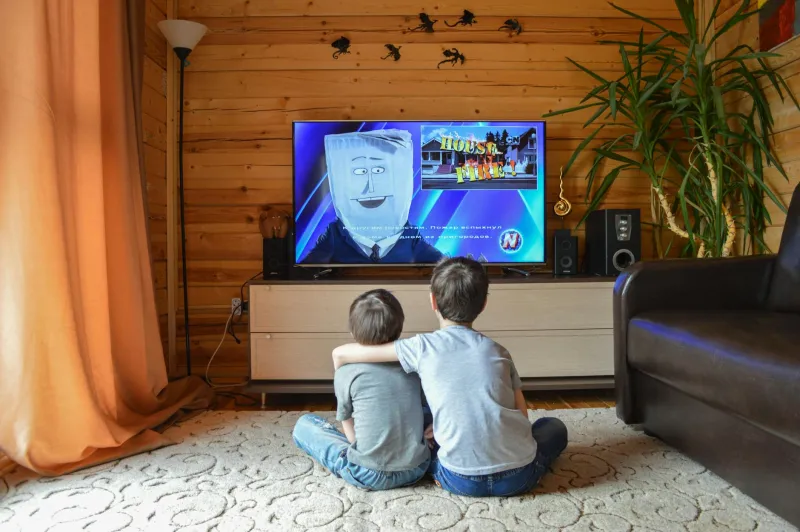
Every Saturday morning from the 1960s through the 1990s, something remarkable happened across America. Without any prompting from parents, millions of children would wake up before sunrise, tiptoe to the living room, and claim their spot on the carpet in front of the family television. By 7 AM sharp, they were ready for what felt like the most important appointment of their week.
This wasn't just watching TV — this was participating in a national ritual that connected kids from Maine to California in a shared experience that defined childhood for an entire generation.
The Magic of Must-See Saturday
Saturday morning television wasn't accidental. It was a carefully orchestrated cultural phenomenon that emerged when the three major networks — ABC, CBS, and NBC — realized they had a captive audience of unsupervised children with nothing else to do.
From 7 AM to noon, these networks rolled out a programming block that became as predictable as sunrise: animated adventures, educational segments disguised as entertainment, and commercials that would fuel playground conversations for the entire following week. Shows like "Schoolhouse Rock," "The Smurfs," "Scooby-Doo," and "The Bugs Bunny & Tweety Show" weren't just entertainment — they were shared cultural touchstones.
What made this era special wasn't just the content, but the experience itself. Every child in America was watching the same thing at the same time. There was no choice, no customization, no algorithm deciding what came next. You watched what was on, when it was on, or you watched nothing at all.
When Breakfast Became Secondary
Parents quickly learned that Saturday mornings operated under different rules. Children who normally had to be dragged out of bed for school would be wide awake and planted in front of the TV before their parents had even considered coffee. Breakfast became something you ate with your eyes glued to the screen, often consisting of whatever sugary cereal was being advertised between cartoons.
The ritual created its own ecosystem. Pajamas were the uniform. Cereal bowls balanced on crossed legs. The remote control — if your family was lucky enough to own one — was unnecessary because nobody was changing the channel anyway. This was appointment television at its purest form.
The Beginning of the End
The first cracks in this childhood institution appeared in the 1990s. The Children's Television Act of 1990 required networks to provide educational programming for kids, which began diluting the pure entertainment focus that had made Saturday mornings so magnetic. Networks started replacing cartoons with live-action shows and educational content that felt more like school than escape.
But the real death blow came from an unexpected source: choice itself.
Cable television exploded throughout the 1990s, bringing dedicated children's channels like Nickelodeon, Disney Channel, and Cartoon Network. Suddenly, kids didn't need to wait until Saturday morning for cartoons — they could watch them any time, any day of the week. The appointment became optional.
The Netflix Revolution
The final nail in Saturday morning's coffin came with on-demand streaming. Netflix, YouTube, and dozens of other platforms didn't just offer choice — they offered infinite choice, available instantly, customized to individual preferences by algorithms that learned what each child liked.
Today's children don't wake up early to watch what's on TV. They wake up and immediately access exactly what they want to watch, when they want to watch it, on whatever device is closest. iPads have replaced the family television. Individual bedrooms have become personal entertainment centers. The shared living room experience has largely disappeared.
What We Lost When We Gained Everything
The death of Saturday morning cartoons represents something larger than just a change in television programming — it marks the end of shared childhood experiences in America.
When every child watched the same shows at the same time, it created a common cultural language. Monday morning playground conversations were filled with references to what everyone had seen over the weekend. Kids could assume their classmates had watched the same episodes, seen the same commercials, and shared the same Saturday morning adventure.
That shared foundation is gone. Today's children have access to more content than any generation in history, but they're experiencing it in isolation. Two kids sitting next to each other might be watching completely different shows on completely different devices, creating personalized entertainment bubbles that rarely overlap.
The Paradox of Infinite Choice
Modern children have unprecedented control over their entertainment, but they've lost something irreplaceable: the anticipation and community that came with limitations. There was something special about waiting all week for Saturday morning, about experiencing the same surprises and disappointments as millions of other kids across the country.
The ritual taught patience, shared experience, and the value of appointment-based entertainment. It created a rhythm to childhood that connected individual kids to something larger than themselves.
A Generation Divided
Today, ask any parent who grew up in the 1970s or 1980s about Saturday morning cartoons, and watch their face light up with nostalgia. They'll remember specific shows, commercial jingles, and the feeling of having those precious five hours of unsupervised television time.
Ask their children about their weekend viewing habits, and you'll get a completely different answer. They'll talk about YouTube channels, Netflix series they're binge-watching, or mobile games they're playing. The concept of waiting for entertainment, of sharing a viewing experience with millions of strangers, is as foreign to them as streaming was to their parents.
The Saturday morning cartoon wasn't just a television programming block — it was the last time American childhood operated on a shared schedule. Its disappearance didn't just change how kids watch TV; it changed how they experience growing up itself.