The Man Behind the Counter Who Already Knew What You Needed — Before Hardware Shopping Became a Cardio Workout

Photo by Photo by Tanya Barrow on Unsplash on Unsplash
It was never really a shopping trip. It was more like a consultation. You walked in with a broken thing or a half-formed plan, described it to the guy at the counter, and walked out twelve minutes later with exactly the right part, a brief tutorial on how to use it, and maybe $3.50 less in your pocket. The neighborhood hardware store was one of the most quietly efficient institutions in American retail history — and most people didn't realize what they had until it was gone.
Now the same errand means driving to a warehouse the size of a regional airport, spending twenty minutes locating the right aisle, another ten failing to find an employee who knows where the plumbing fittings are, and somehow leaving with $400 worth of stuff when you came in for a $7 part.
The transformation of hardware retail in America is a story about more than shopping. It's about what happens when scale replaces expertise, and convenience replaces knowledge.
What the Old Hardware Store Actually Was
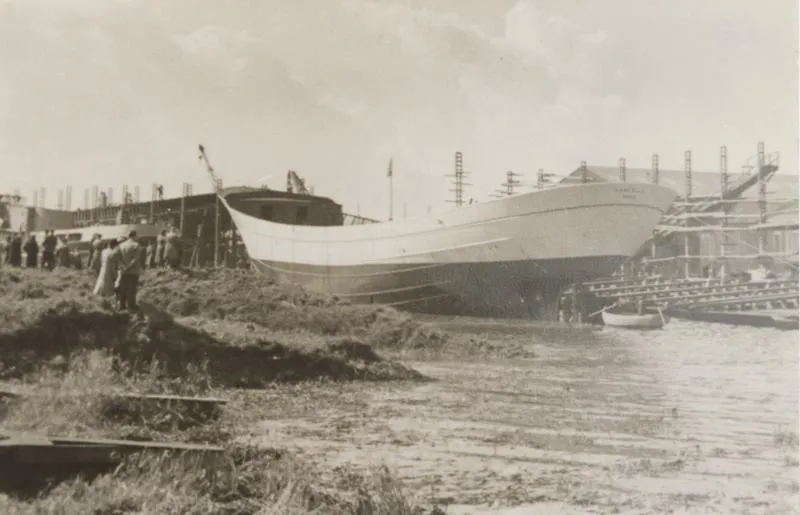
Through the mid-20th century, independent hardware stores were as common in American towns as barbershops and diners. They were small by modern standards — maybe 1,500 to 3,000 square feet — and densely packed. Bins of loose screws. Drawers of specialty fasteners. Shelves of paint, caulk, rope, sandpaper, and pipe fittings organized in ways that only made sense if you'd worked there for twenty years.
And usually, someone had. The owner, or a long-tenured employee, was the real product being sold. They could look at a stripped bolt you'd brought in a paper bag and tell you the thread pitch, the grade, and which drawer it was in. They stocked the two screws you needed, not a box of fifty. They carried regional brands that actually worked for local conditions — the right caulk for a cold-weather climate, the right adhesive for the local humidity.
More than that, they remembered you. If you'd come in last spring about a leaky faucet and now you were back about a running toilet, they'd connect the dots. The transaction had continuity. It felt less like retail and more like having a knowledgeable neighbor who happened to carry inventory.
Prices reflected the scale of the operation rather than the size of a corporate margin. You paid a little more per unit than you might at a big chain, but you bought only what you needed, wasted nothing, and left knowing you had the right thing.
When the Warehouses Arrived
The Home Depot opened its first two stores in Atlanta in 1979. Lowe's had been around longer as a regional chain but expanded aggressively through the 1980s and 1990s. The pitch was hard to argue with at first glance: more products, lower prices, one-stop shopping for everything from lumber to light fixtures.
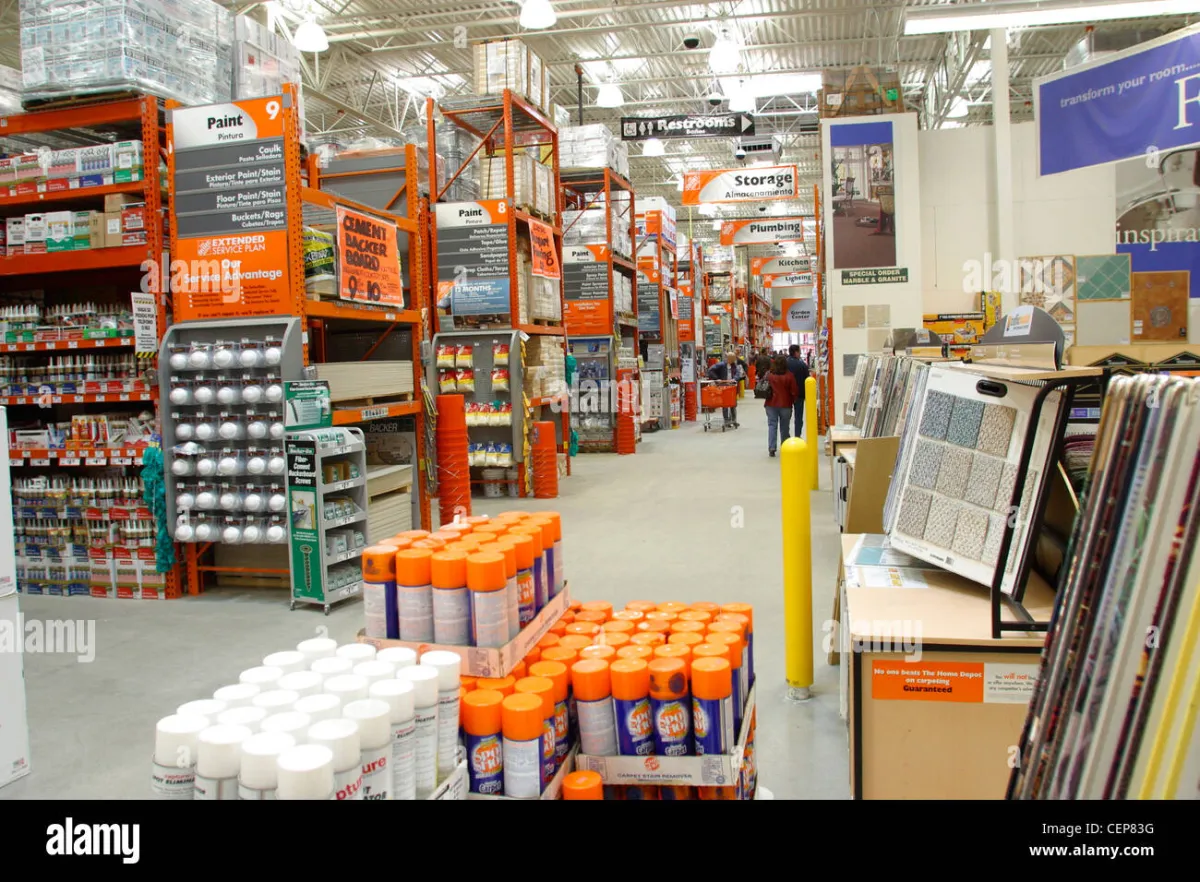 Photo: The Home Depot, via c8.alamy.com
Independent hardware stores couldn't compete on price or selection. They began closing through the 1980s and accelerated their exit through the 1990s. The National Hardware Association estimated that tens of thousands of independent stores disappeared in the span of two decades. What replaced them were destinations — places you drove to, not walked to, and spent an hour in rather than ten minutes.
The big-box model worked brilliantly as a business. Home Depot now operates more than 2,300 stores and generates over $150 billion in annual revenue. By almost any financial metric, the industry transformation was a success.
But something got lost in the square footage.
The Hidden Cost of Going Big
Anyone who's attempted a simple home repair in the last fifteen years knows the experience well. You need one specific thing. You go to the big-box store because it's the only option within reasonable distance. You cannot find the thing. You find an approximation of the thing. You ask a staff member, who consults their phone's store map and walks you to the approximate vicinity. You buy what seems closest. You get home. It's wrong.
You make a second trip.
This is so common it's almost become a cultural joke — the home project that requires three separate hardware runs. But it wasn't always this way. The old hardware store owner didn't just sell you the part; he sold you the right part. That distinction, repeated across millions of transactions, represented an enormous collective savings of time, money, and frustration.
There's also the issue of what big-box retail did to the unit economics of small purchases. The old store would sell you three screws. The modern alternative sells you a box of 100. You need two feet of chain. You buy ten feet. The result is American garages and junk drawers overflowing with partial boxes of things that will never be used, purchased in quantities nobody needed because the alternative wasn't available.
And then there's the cart creep. There's something about the scale and layout of a warehouse store that makes spending $400 on a project that should cost $60 feel almost inevitable. The wide aisles, the massive displays, the seasonal sections — they're engineered to expand the transaction. The old hardware store, by contrast, was almost physically incapable of producing impulse spending. There wasn't room for it.
The Expertise Economy You Didn't Know You Were Part Of
What the neighborhood hardware store really represented was a form of embedded expertise that consumers accessed for free as part of the retail transaction. You weren't just buying a washer; you were buying the knowledge of which washer, installed how, with what precaution. That knowledge had real economic value — it prevented botched repairs, unnecessary purchases, and contractor calls that could run hundreds of dollars.
When that expertise left the retail floor and moved behind a YouTube search bar, something shifted. The information is still out there, technically. But it requires you to correctly identify your own problem, find the right video, and trust that your situation matches the one being demonstrated. The hardware store owner looked at your actual thing and gave you a specific answer. That's a different service entirely.
A handful of independent stores have survived, often in smaller towns or in neighborhoods where the community actively chose to support them. Some have carved out niches in specialty areas — restoration hardware, professional-grade tools, obscure fasteners that the big boxes don't carry. They tend to be staffed by people who genuinely know the inventory, which makes them feel startlingly old-fashioned in the best possible way.
What We Traded and What We Got
The big-box hardware store gave Americans access to a staggering range of products at competitive prices, and that's not nothing. For large projects — a deck build, a bathroom remodel, a fence installation — the modern warehouse store is genuinely useful in ways the old corner shop couldn't match.
But for the everyday repair, the small fix, the quick solution to a minor household problem, the trade was a bad one. We gave up expertise, efficiency, and community connection in exchange for scale we mostly don't need and a parking lot that takes five minutes to navigate.
The man behind the counter knew what you needed before you finished describing it. That was worth something. It just took losing it to understand exactly how much.