The Man Who Left Milk on Your Porch Before You Woke Up — America's First Delivery Economy
The Man Who Left Milk on Your Porch Before You Woke Up — America's First Delivery Economy
Sometime around 4:30 in the morning, before the neighborhood stirred, he'd come. Glass bottles clinking softly in their wire carrier, footsteps on the porch, the quiet clink of a fresh quart setting down next to the empty one you'd left out the night before. By the time you came downstairs for breakfast, the milk was already cold and waiting.
The milkman didn't need an app. He didn't need a GPS route or a customer rating. He knew your address, your usual order, and probably the names of your kids. And he showed up — Tuesday and Friday, every week, without fail.
America had a home delivery economy long before Silicon Valley decided to reinvent it.
A System Built on Schedules and Trust
At its peak in the 1950s, roughly half of all milk consumed in American homes was delivered directly to the door. The milkman was just the most visible thread in a much larger network of people who came to you — the iceman who hauled blocks to keep your cooler running, the bread route driver who swung by with fresh loaves, the egg man, the produce peddler, the dry goods salesman who worked the same neighborhood streets week after week.
This wasn't chaos. It was a remarkably well-organized local economy. Each route was a small business. Drivers knew their customers by name, kept mental notes on preferences, and maintained the kind of relationships that made commerce feel personal. If you wanted an extra quart for a holiday gathering, you left a note in the empty bottle. The note would be read. The extra quart would arrive.
There were no tracking numbers. No delivery windows. No "your order is two stops away" notifications. Just a mutual understanding built on years of showing up.
The Iceman and the Bread Man and Everyone Else
Milk gets most of the nostalgia, but the milkman was just the most enduring example of a much broader home-delivery culture.
Before electric refrigerators became standard household items in the late 1940s, the iceman was essential. He'd haul a massive block up your porch steps, chip it to size, and load it into your icebox — often twice a week. Families would hang a card in the window indicating how many pounds they needed that day, and he'd read it from the street.
Bread routes were equally common. Companies like Wonder Bread and regional bakeries employed drivers who covered the same neighborhood blocks on the same mornings each week, selling directly from the back of their trucks. Some families did virtually no grocery shopping for staples — they simply waited for the right person to come down the street.
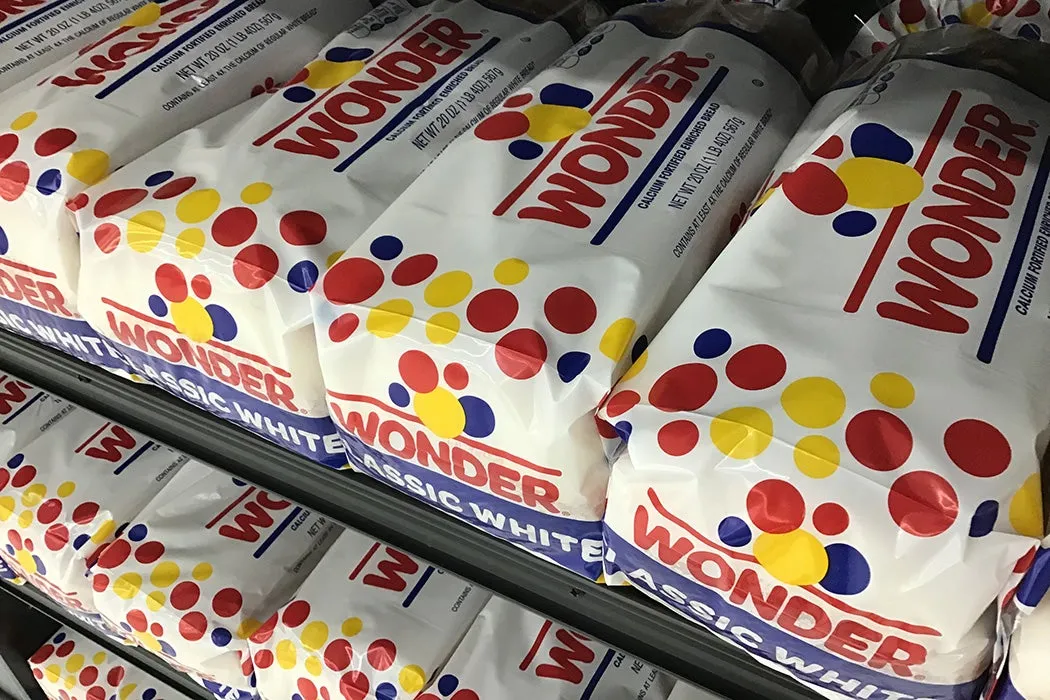 Photo: Wonder Bread, via daily.jstor.org
Traveling merchants sold everything from fresh vegetables to brushes to patent medicines. The Fuller Brush Man became such a cultural institution that he appeared in films and cartoons. The Watkins man came to rural communities that had no nearby store to speak of. These weren't nuisances — they were expected, welcomed, and often the social highlight of an otherwise quiet Tuesday afternoon.
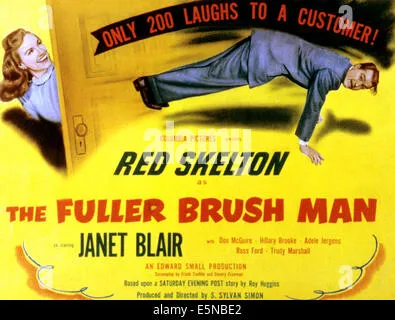 Photo: Fuller Brush Man, via l450v.alamy.com
Why It All Disappeared
The answer is mostly supermarkets and cars.
As automobile ownership exploded in the postwar years and supermarkets began offering everything under one roof at lower prices, the economics of individual delivery routes started to crumble. Why wait for the bread man when you could drive to the A&P and pick up bread, milk, eggs, and a pot roast in a single trip?
Refrigeration also changed the equation. Once every home had an electric refrigerator, the need for frequent, small deliveries faded. You could stock up for a week instead of receiving daily drops. The iceman became obsolete almost overnight.
By the 1970s, the milkman was already a fading figure. By the 1980s, he was largely gone from American suburbs. A few regional dairies kept home delivery alive in specific markets, but the era of the regular route man was essentially over.
The Wheel Comes Full Circle
And then, decades later, we decided we wanted it back.
DoorDash launched in 2013. Instacart followed. Amazon Prime built a delivery infrastructure so vast that same-day arrival became an expectation rather than a luxury. During the pandemic, grocery delivery went from novelty to necessity almost overnight. Americans remembered, suddenly and urgently, how convenient it was to have things brought to the door.
On the surface, it looks like the same idea. In practice, it could hardly be more different.
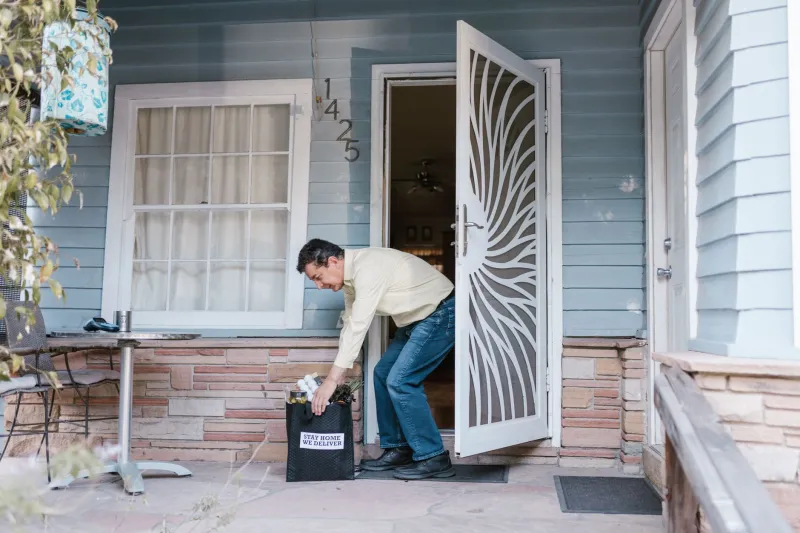
Today's delivery economy is built on anonymity and speed. The person who drops your groceries on the porch is a gig worker you'll likely never see again, working an algorithm-assigned route, rated on a five-star scale, and competing with dozens of other drivers for the same orders. There's no relationship. No note in the bottle. No sense that anyone on the other end knows you specifically or cares whether you got your extra quart.
The efficiency is remarkable. The humanity is largely absent.
What the Milkman Actually Delivered
It's tempting to romanticize the old system. It had real limitations — the selection was narrow, the prices weren't always competitive, and the schedule wasn't always convenient. Nobody is seriously proposing that we go back to horse-drawn milk wagons.
But the milkman represented something that today's delivery economy hasn't quite figured out how to replicate: the idea that commerce could be built on an ongoing relationship rather than a series of individual transactions. He was a small business owner with a stake in his customers' satisfaction. He had a name. He had continuity.
When he retired or moved on, people noticed. When your DoorDash driver doesn't show up, you just click "report a problem" and move on.
America invented home delivery, perfected it, abandoned it, and then reinvented it at enormous scale. What got lost somewhere in the middle was the part where the person delivering your milk knew how you took your coffee.