The Envelope System That Kept American Families Out of Debt — And the Digital Age That Made It Nearly Impossible
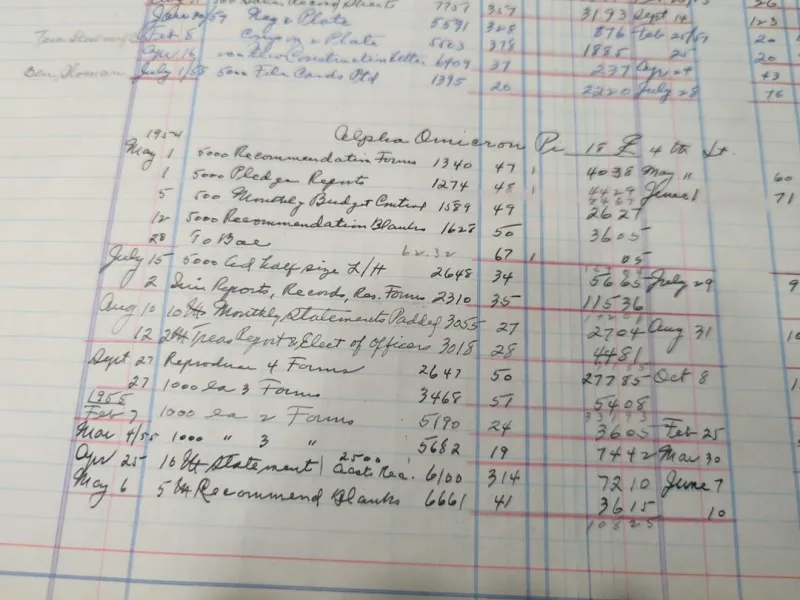
Photo: vintage 1950s household budget ledger book pencil cash envelopes kitchen table, via i.etsystatic.com
Sit down with someone who managed a household budget in 1955 and ask them how much they spent on groceries last month. They'll tell you without hesitating. They might even tell you how that compared to the month before, and whether the butcher's prices had gone up.
Ask the same question to an average American household today, and you're likely to get a shrug, an estimate, and a suggestion to check the app.
Something changed between then and now — and it's not just that we got busier.
The Ledger Book Was Law
For much of the 20th century, household financial management was a physical act. It required a dedicated notebook — often a proper ledger book with pre-printed columns — a sharp pencil, and the discipline to sit down regularly and record what came in and what went out.
Every paycheck was noted. Every bill was logged. Rent, groceries, the electric bill, the insurance premium, the doctor's visit, the school shoes — each expense had a line. At the end of the week or month, you'd total the columns and see, in undeniable black and white, exactly where the money had gone.
There was no hiding from a ledger. If you'd overspent on dining out, it was right there in the column. If the grocery bill had crept up three weeks in a row, you could see the trend before it became a problem. The ledger didn't judge you — but it didn't let you pretend, either.
Cash in an Envelope: The Original Zero-Based Budget
Alongside the ledger book, many American families — particularly those living on tight working-class incomes — relied on what financial planners today call the envelope system, though nobody called it that at the time. It was just how you managed money.
At the start of each pay period, you'd divide your cash into labeled envelopes: one for rent, one for groceries, one for utilities, one for clothing, one for emergencies. When the grocery envelope was empty, groceries were done for that period. There was no borrowing from the rent envelope unless things were genuinely dire. The physical reality of a thinning envelope was impossible to ignore in a way that a declining bank balance on a screen simply is not.
This system had a built-in psychological feedback loop that modern digital banking has quietly dismantled. When you hand over paper bills, you feel the transaction. When you tap a card or click "confirm order," the friction is almost zero — and friction, it turns out, was doing a lot of financial work.
The Shift Happened Gradually, Then All at Once
Credit cards arrived in American wallets in the late 1950s, but widespread adoption took decades. For a long time, many families treated credit as a last resort — something for emergencies, not everyday spending. The ledger book stayed relevant well into the 1970s and 1980s for households that paid primarily in cash or check.
Checks, actually, were their own form of accountability. Writing a check required you to record it in the register, subtract the amount from your balance, and literally sign your name to the expenditure. It was slower than swiping a card. That slowness was a feature, not a bug.
Online banking began replacing paper statements in the early 2000s. Autopay followed, promising to eliminate the hassle of remembering due dates. And then came the subscription economy — streaming services, software licenses, gym memberships, meal kits, news sites, cloud storage — each one billing a small amount automatically every month, quietly and persistently, long after many customers had forgotten they'd signed up.
By the 2010s, the average American household was carrying a portfolio of recurring charges that would have baffled a 1960s family trying to make sense of where the money went.
The Invisible Budget
Here's the uncomfortable reality: most Americans today have only a vague sense of their monthly spending. Studies consistently show that people underestimate their discretionary spending by significant margins — often 20 to 40 percent. The gap isn't stupidity or carelessness. It's a direct result of how invisible modern financial transactions have become.
When your rent autopays on the first, your streaming services bill on the 7th, 12th, and 19th, your gym membership hits on the 15th, and your annual software renewal charges on a date you've long since forgotten, there's no single moment of reckoning. There's no envelope that goes empty. There's no column in a ledger that forces you to add it all up.
You can go months — sometimes years — paying for services you no longer use, subscriptions that renewed without notice, and memberships that felt cheap individually but add up to something significant collectively. The average American household now spends an estimated $200 to $300 per month on subscription services alone, and surveys suggest most people guess their actual total at roughly half that.
What the Pencil Knew That the App Doesn't
Modern budgeting apps are impressive. They sync to your accounts, categorize your spending automatically, and generate charts that would have taken a 1950s accountant a full afternoon to produce. The information is available. The question is whether we actually engage with it.
The ledger book demanded engagement. You couldn't receive the information passively — you had to generate it yourself, by hand, which meant you processed it differently. The act of writing "$4.75, lunch" seventeen times in a month made the pattern visible in a way that a pie chart you glance at once a week does not.
There's growing evidence that the physical act of recording spending increases financial awareness in ways that automated tracking doesn't fully replicate. Some financial advisors now recommend hybrid approaches — keeping a simple handwritten spending log alongside digital tools — specifically because the manual process creates a kind of mindfulness that automation erodes.
The Dollar You Can't See Is the One That Gets Away
American families in the postwar era didn't have more willpower than we do today. They weren't more virtuous about money. They were simply operating in a system where every dollar was visible, tangible, and required a conscious decision to spend.
The envelopes got thin. The ledger columns filled up. The checkbook register showed you the math in real time. There was no way to accidentally forget that you'd already spent the grocery budget, because the grocery envelope was right there in the kitchen drawer, and it was nearly empty.
We traded that friction for convenience, and the trade made sense in many ways. But somewhere in the process, we also traded away the intimacy we used to have with our own finances — the simple, grounded knowledge of exactly where the money went.
The pencil knew. The envelope knew. And so did the family sitting at the kitchen table, adding up the columns before bed.