From $25 an Album to $11 a Month for Everything: How We Broke the Music Business
There's a good chance you're paying $10.99 a month for Spotify right now. Or maybe Apple Music. For that, you have access to over 100 million songs, any time, on any device, with no ads. It's an almost absurd amount of music for roughly the price of two fancy coffees.
But here's what makes that number really interesting: adjusted for inflation, your grandparents spent far more than that on music — and they got a handful of records to show for it. The story of how we got from there to here is one of the most dramatic economic reversals in modern entertainment history.
The Vinyl Era: Music as a Real Purchase
In the 1960s and 70s, buying music meant buying a physical object. A standard LP record in 1970 retailed for around $4 to $5. That sounds cheap until you run it through an inflation calculator — $4 in 1970 is equivalent to roughly $32 today. And that bought you one album. Twelve to fourteen songs, if you were lucky.
For a music fan who bought even one or two records a month, the annual cost in today's dollars would be $300 to $600 or more — just for new music. And unlike streaming, if you wanted to hear a song you didn't own, you waited for the radio to play it.
The record labels thrived. Artists who managed to sell hundreds of thousands of copies could become genuinely wealthy. The economics were simple: fans paid a lot per unit, and the money (minus the label's considerable cut) flowed back through the system.
Cassettes and the First Hint of Disruption
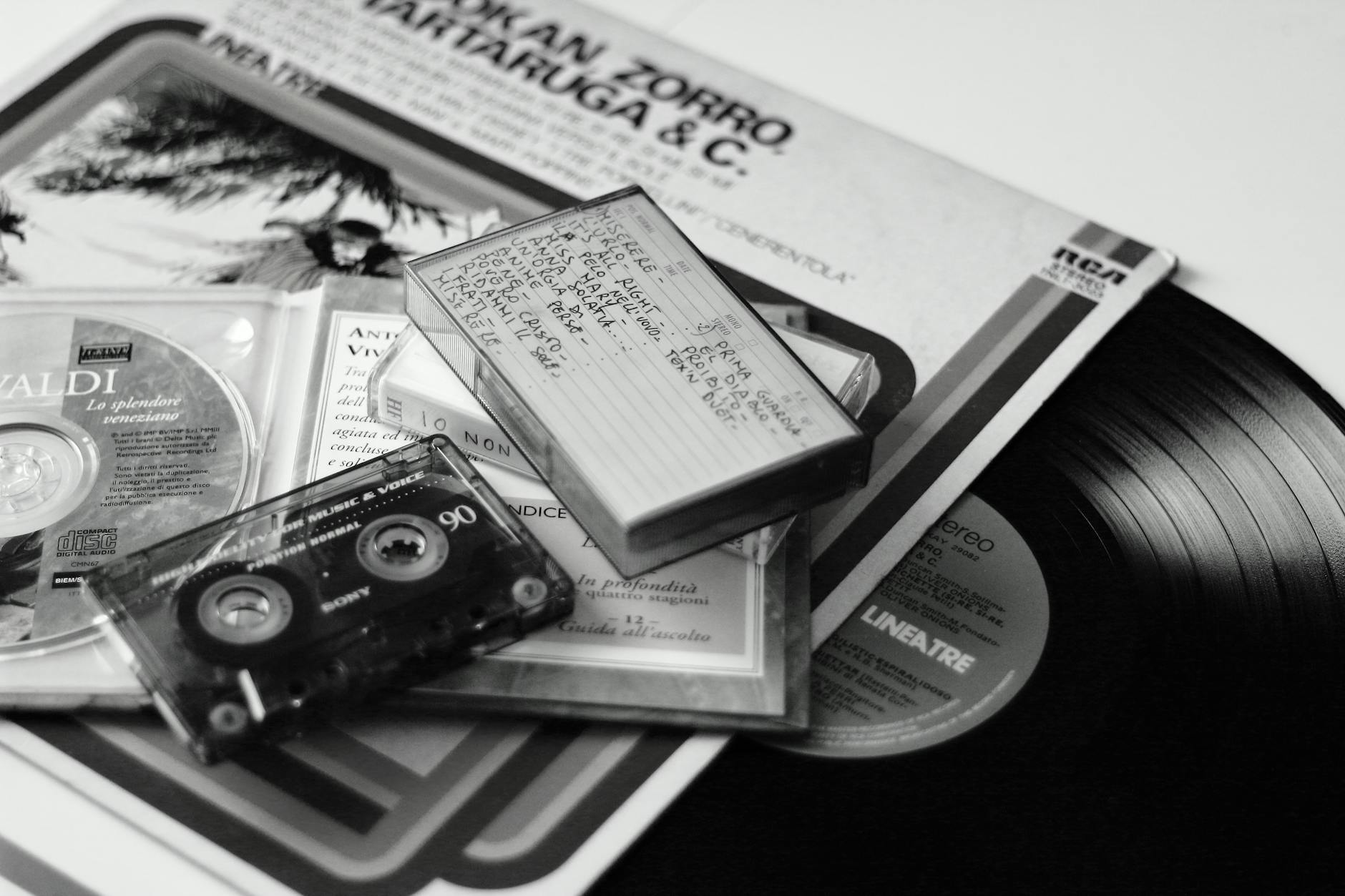
The cassette tape era of the late 1970s and 80s introduced a new wrinkle: the home recording. Blank tapes were cheap, and suddenly fans could copy albums from friends or record songs off the radio. The Recording Industry Association of America famously ran ads warning that "home taping is killing music" — a concern that, in retrospect, was a preview of battles to come.
Cassette albums themselves were priced similarly to vinyl, running $7 to $10 throughout the 1980s. That's $22 to $31 in today's dollars per album. A teenager with a modest music habit — say, a couple of tapes a month — was spending what would now be $500 to $700 annually on music. Many spent considerably more.
The CD Peak: When Music Was Most Expensive
If vinyl and cassettes were pricey, the compact disc era was arguably the most expensive period in music history for the average consumer. CDs launched in the early 1980s and dominated through the 1990s and into the 2000s. New release CDs routinely sold for $15 to $18 at retail — sometimes more.
In inflation-adjusted terms, a $16 CD purchased in 1995 cost the equivalent of about $32 today. A music fan buying two or three CDs a month — completely normal behavior in the mid-90s — was spending what would now be $75 to $100 per month, or $900 to $1,200 per year.
The labels were printing money. Total U.S. recorded music revenues peaked in 1999 at approximately $14.6 billion (about $26 billion in today's dollars). It was the highest point the industry had ever reached, and it was about to collapse almost immediately.
Napster, iTunes, and the Slow Dismantling
Napster launched in 1999 and within two years had an estimated 80 million registered users sharing music for free. The legal hammer came down eventually, but the genie was out. Consumers had experienced free music and weren't eager to go back.
Apple's iTunes Store, launched in 2003, offered a compromise: 99 cents per song, $9.99 per album. It felt like a bargain compared to CDs, and it was. But adjusted for inflation, $9.99 in 2003 is about $16.50 today — still not cheap for a single album.
The download era also changed listening behavior. People stopped buying albums and started buying songs. The "album" as an artistic unit took a commercial hit it's never fully recovered from. Why pay $10 for twelve tracks when you only wanted two of them?
The Streaming Math: A Genuinely Shocking Comparison
Spotify launched in the U.S. in 2011. Apple Music followed in 2015. By 2023, streaming accounted for 84% of all recorded music revenue in the United States, according to the RIAA.
The consumer math is almost surreal when you lay it out. A Spotify Premium subscription costs $10.99 per month, or about $132 per year. For that, you get unlimited access to roughly 100 million tracks. Compare that to the CD era fan spending $900 to $1,200 annually for maybe 30 to 40 albums. Or the vinyl buyer dropping $32 in today's money every time they wanted a new record.
For listeners, streaming is the best deal in the history of recorded music. Full stop.
What the Artists Got Out of It
Here's the other side of the ledger, and it's considerably less cheerful.
Spotify pays artists between $0.003 and $0.005 per stream, depending on various factors. To earn $1,000 from streaming, an artist needs roughly 250,000 plays. A mid-level artist with a dedicated but modest fan base — say, 50,000 monthly listeners — might generate a few hundred dollars a month from Spotify. In the CD era, that same artist selling 500 albums a month at even a modest royalty rate would have earned significantly more per listener.
Total U.S. recorded music revenues in 2023 were about $8.7 billion — still well below the $26 billion (inflation-adjusted) peak of 1999. The industry recovered from its post-Napster lows, but it never climbed back to where it was.
The streaming model concentrates revenue at the very top. The artists with hundreds of millions of streams — your Taylor Swifts, your Morgan Wallens — do fine. The artists in the middle, the ones who used to sustain careers selling physical records to loyal regional fanbases, are the ones who got squeezed most.
The Trade-Off We Made Without Quite Realizing It
We didn't vote on the economics of streaming. It just happened, driven by technology, consumer behavior, and corporate strategy. The result is a world where listeners have more access to more music than at any point in human history, for less money than ever before.
What we may have traded for that convenience is a music industry that's harder to build a middle-class career in — fewer full-time working musicians, more dependence on touring and merchandise, and a creative economy increasingly shaped by what algorithms surface rather than what record stores stock.
The music is still there. A hundred million songs, eleven dollars a month. Whether the system that creates it can stay healthy on those terms is the question nobody's quite figured out yet.