When Words Traveled Slowly and Mattered Forever
The Weight of Paper and Permanence
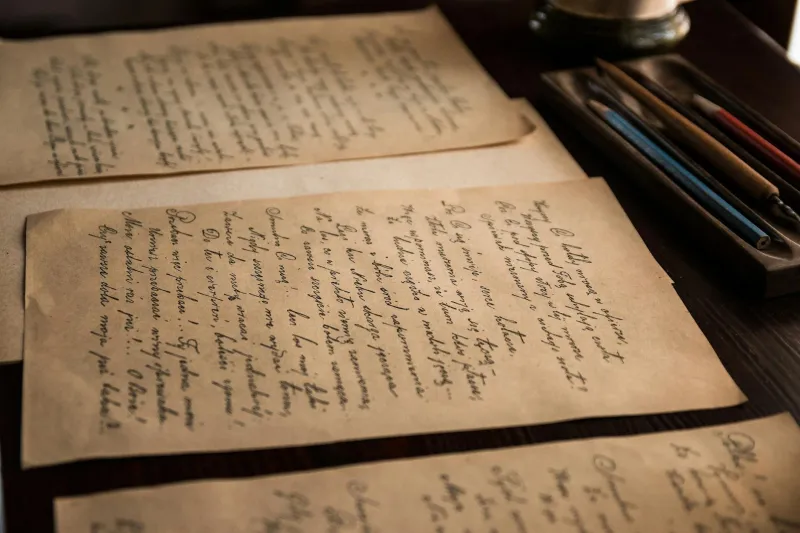
In 1975, when Sarah Mitchell wanted to tell her college roommate about her new job in Denver, she sat down at her kitchen table with a fountain pen, cream-colored stationery, and the knowledge that her words would take five days to travel 1,200 miles. She chose each sentence carefully. There were no delete keys, no edit buttons, no way to unsend regrettable thoughts fired off in haste.
 Photo: Sarah Mitchell, via www.thesun.ie
That letter — along with hundreds of others — sits today in a shoebox in Sarah's closet, a physical record of a friendship that spanned decades. The paper has yellowed slightly, but the words remain exactly as she wrote them, a permanent testament to thoughts and feelings that once seemed important enough to commit to ink and postage.
This was how Americans communicated for most of our history. Slowly, deliberately, and with the understanding that written words carried weight. A letter was an investment — in time, in thought, in the relationship itself.
The Ritual of Real Correspondence
Letter writing wasn't just communication; it was ceremony. Americans kept writing desks stocked with proper stationery, fountain pens that required care and attention, stamps chosen for both function and beauty. The act of writing a letter demanded intention. You couldn't dash off a quick note while walking down the street or sitting in a meeting.
Families maintained correspondence with relatives scattered across the country through carefully scheduled letter exchanges. Sunday afternoon was letter-writing time in millions of American homes. Children learned cursive not just for school, but because legible handwriting was essential for maintaining relationships across distance.
The postal service operated like a vast nervous system connecting the country. Letters mailed on Monday arrived by Friday with clockwork reliability. Americans planned their correspondence around postal schedules, timing important news to arrive for birthdays, holidays, or significant events.
When Distance Created Intimacy
Paradoxically, the slowness of letter writing created deeper intimacy than our instant communication ever has. When you knew your words wouldn't arrive for a week, you made them count. Letters contained full thoughts, complete stories, emotional depth that couldn't be captured in hurried exchanges.
College students wrote home with detailed accounts of their experiences, knowing parents were hungry for every detail of their new independent lives. Military families maintained connections across continents through letters that served as lifelines to home. Romance bloomed through carefully crafted correspondence that built anticipation and emotional connection over time.
The delay between sending and receiving created space for reflection. You couldn't immediately respond to news, good or bad. Letters forced Americans to process information, consider their responses, and reply with thoughtfulness rather than impulse.
The Economics of Thoughtful Communication
A first-class stamp in 1980 cost fifteen cents. For less than a quarter, you could send several pages of thoughts anywhere in America. International mail cost more, making overseas correspondence feel genuinely special. The modest cost meant that staying in touch was accessible to virtually everyone, but the effort required ensured that people didn't waste the opportunity.
Stationery stores thrived on the letter-writing culture. Americans invested in quality paper, matching envelopes, and pens that made writing a pleasure rather than a chore. Personal stationery was a common graduation or wedding gift, acknowledging that maintaining relationships through correspondence was a lifelong responsibility.
The postal service employed hundreds of thousands of Americans in an infrastructure dedicated to connecting people across distance. Mail carriers knew their routes intimately, often serving as informal community connectors who understood the rhythm of correspondence in their neighborhoods.
The Digital Revolution That Changed Everything
Email arrived in the 1990s promising to make communication faster and easier. And it did — sort of. Suddenly, messages could travel instantly, but something fundamental changed in the process. The permanence disappeared first. Email felt temporary, disposable, easily deleted or lost in overflowing inboxes.
Text messaging accelerated the transformation. Communication became conversational rather than contemplative. Messages got shorter, thoughts became fragments, and the art of crafting complete ideas gave way to rapid-fire exchanges that mimicked speech more than writing.
Social media completed the revolution. Personal updates became public broadcasts. Private correspondence turned into performative communication designed for audiences rather than individuals. The intimate one-to-one connection that letters provided was replaced by one-to-many broadcasting that felt less personal even as it reached more people.
What We Gained and What We Lost
The benefits of instant communication are undeniable. Families stay connected across continents in real-time. Emergency information travels immediately. Business moves at digital speed. We can maintain casual contact with hundreds of people simultaneously.
But we've also lost something irreplaceable. The physical artifacts of relationships — those shoeboxes full of letters that documented friendships, courtships, and family connections — have vanished. Digital messages disappear when phones break, accounts close, or platforms shut down. The permanent record of our most important relationships exists now only in corporate servers, if at all.
The thoughtfulness that slow communication required has been replaced by the anxiety of immediate response. We feel pressure to reply instantly, often firing off messages we later regret. The space for reflection that letters provided has been compressed into the milliseconds between receiving and responding to digital messages.
The Lost Art of Anticipation
Perhaps most significantly, we've lost the sweet anticipation that came with letter writing. Waiting for mail created emotional investment in communication. The arrival of a letter was an event, something to be savored and shared. The physical act of opening an envelope, unfolding carefully chosen paper, and reading words written specifically for you created intimacy that digital communication has never replicated.
Modern communication happens so quickly that it often feels weightless. Messages arrive constantly, creating noise rather than connection. We're more connected than ever but often feel less understood, overwhelmed by the volume of shallow interactions that have replaced fewer but deeper exchanges.
The Permanent Record of Temporary Lives
Americans who lived through the letter-writing era have physical proof of their relationships and personal growth. Letters reveal how people changed over time, how relationships evolved, how major life events unfolded through the eyes of the people who experienced them. These documents serve as personal historians, preserving not just events but the emotions and thoughts that surrounded them.
Today's digital natives will leave behind no such record. Text messages disappear, social media posts get deleted, and email accounts close. The most intimate moments of modern relationships exist only in the ephemeral digital spaces that feel permanent but aren't.
When Slow Was Better
The letter-writing era forced Americans to be better communicators. When you had one chance to convey your thoughts, you learned to organize them clearly. When your words would be read and reread, you chose them carefully. When response time was measured in days rather than seconds, you developed patience and thoughtfulness.
We've traded that deliberate, meaningful communication for the illusion of constant connection. We're always in touch but rarely truly connected, always communicating but seldom saying anything that will matter next week, let alone next decade.
The letters in Sarah Mitchell's shoebox represent more than just correspondence — they're evidence of a time when Americans understood that some things are worth waiting for, and that the best conversations happen slowly, thoughtfully, and with the understanding that words, once written, become permanent pieces of ourselves we give to others.