The Man Who Fixed Everything: When Every Neighborhood Had a Guy Who Could Save Your Stuff
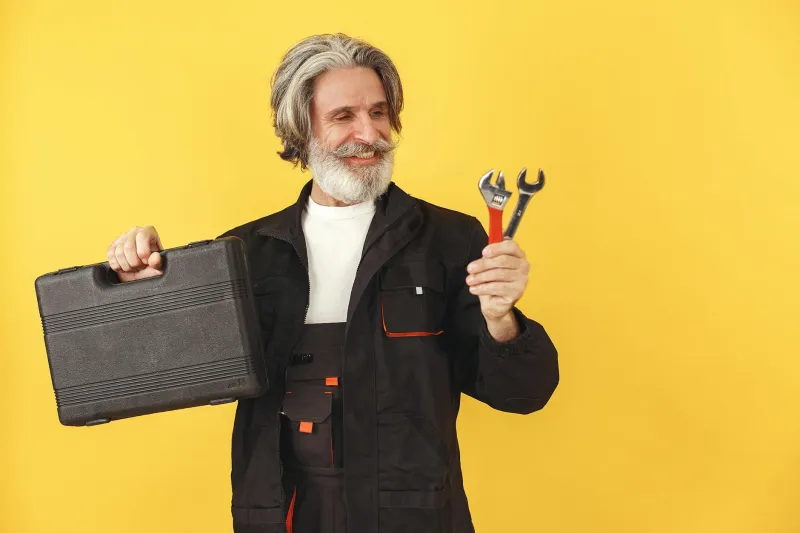
In 1975, when Margaret Chen's Zenith television started displaying nothing but horizontal lines, she didn't drive to Best Buy or browse Amazon for a replacement. She called Eddie Kowalski, whose business card was magnetted to her refrigerator next to the phone numbers for the doctor, the plumber, and the pizza place.
 Photo: Margaret Chen, via www.muchloved.com
 Photo: Eddie Kowalski, via images.gr-assets.com
Eddie showed up Tuesday afternoon with a toolbox that looked like it had survived World War II. He spent twenty minutes poking around inside the TV, replaced a couple of tubes, and charged her twelve dollars. The Zenith worked perfectly for another eight years.
This was America before everything became disposable — when broken didn't mean worthless, and every neighborhood had people whose entire livelihood depended on making old things work like new again.
The Army of Fixers
Every American community once supported an entire ecosystem of repair specialists. The TV repairman was just one soldier in an army of fixers who kept the consumer economy running through restoration rather than replacement.
Downtown, Sam's Shoe Repair could rebuild worn-out soles, stretch tight leather, and make twenty-year-old boots look nearly new for a fraction of the cost of replacement. The appliance repair shop on Main Street employed three full-time technicians who could resurrect washing machines, dryers, and refrigerators that manufacturers today would declare beyond hope.
Watch repair shops occupied prime real estate in shopping districts, their windows filled with intricate timepieces and tiny tools. Radio and electronics repair businesses thrived in the back corners of hardware stores, staffed by men who understood vacuum tubes and transistors like mechanics understood carburetors.
Even clothing alterations were a thriving trade. Every dry cleaner employed seamstresses who could take in waists, hem pants, and repair tears so skillfully that the fix was invisible. Americans expected their clothes to last for years, and when they didn't fit quite right anymore, they paid someone to make them fit again.
House Calls Were Normal
What made the repair economy truly different was that fixers came to you. The television repairman scheduled house calls like doctors made house calls — it was simply how business worked. Lugging a 200-pound console TV to a repair shop made no sense, so repair technicians loaded their vans with tools and spare parts and drove from house to house.
Appliance repair worked the same way. When your washing machine started making strange noises, you called the local repair company and scheduled an appointment. A technician would arrive with a truck full of replacement parts, diagnose the problem on the spot, and usually fix it the same day.
The house call model created relationships between repairmen and customers that lasted decades. Eddie the TV guy knew every television in a six-block radius. He remembered which models were reliable, which ones had common problems, and which customers took good care of their equipment. This knowledge made him incredibly efficient — he often knew what was wrong before he walked through your front door.
Why Everything Got Fixed
The repair economy thrived because the economics made perfect sense for everyone involved. Consumer goods were built to last but expensive enough that replacement hurt your budget. A decent television cost several weeks' wages, so spending twenty dollars to fix it was an obvious choice.
Manufacturers supported this system by making replacement parts readily available and publishing detailed service manuals. Zenith, RCA, and General Electric wanted their products to be repairable because satisfied customers bought the same brand again when replacement time eventually came.
Repair businesses stayed profitable because labor was relatively inexpensive and parts were cheap. A television repair shop could stock tubes and components for dozens of different models without tying up too much capital. The skill required was substantial, but not so specialized that it required years of training.
The Economic Earthquake That Changed Everything
Several forces converged in the 1980s and 1990s to demolish America's repair culture almost overnight. The most obvious was the flood of inexpensive electronics manufactured in Asia. When a new television cost $200 instead of $800, spending $75 to fix an old one stopped making financial sense.
But cheaper goods were only part of the story. Manufacturers deliberately began designing products that were difficult or impossible to repair. Screws were replaced with plastic clips that broke when removed. Components were sealed in resin or soldered directly to circuit boards. Service manuals disappeared, replaced by policies that voided warranties if anyone other than authorized technicians opened the device.
The rise of planned obsolescence meant that products were designed to fail after a predetermined lifespan, usually just after the warranty expired. Why make something that could be repaired for decades when you could sell a new one every few years?
The Skills That Vanished
As repair shops closed, an entire body of American knowledge disappeared with them. The ability to diagnose mechanical problems by sound, to test electronic components with simple tools, and to fabricate replacement parts when originals weren't available — these skills took years to develop and couldn't be learned from YouTube videos.
More importantly, Americans lost the expectation that things should be fixable. Previous generations automatically assumed that broken items could be repaired, and they structured their buying decisions around durability and repairability. When that assumption disappeared, it fundamentally changed how we think about ownership and value.
What We Gained and Lost
The shift from repair to replacement brought undeniable benefits. Modern appliances are more energy-efficient, safer, and often more reliable than their predecessors. The inconvenience of scheduling repair appointments and living without essential appliances while they were being fixed is largely gone.
But we also lost something valuable: the understanding that most things can be saved rather than discarded. The repair culture taught Americans to value durability over novelty, to maintain their possessions carefully, and to think long-term about their purchases.
Perhaps most significantly, we lost the neighborhood relationships that repair businesses fostered. Eddie the TV repairman wasn't just a service provider — he was part of the community fabric, someone who knew your family and cared about your satisfaction because his livelihood depended on your loyalty.
The Environmental Reckoning
Today, as Americans grapple with overflowing landfills and electronic waste, the wisdom of the repair economy looks increasingly prophetic. Every television that Eddie fixed in the 1970s was one fewer TV in a dump. Every pair of shoes that Sam resoled was one less pair manufactured and shipped from overseas.
The environmental cost of our throwaway culture is becoming impossible to ignore. Americans generate over 250 million tons of waste annually, much of it consisting of items that previous generations would have routinely repaired.
The Quiet Return
Interestingly, repair culture is showing signs of life in unexpected places. Independent phone repair shops have sprouted in strip malls across America, fixing cracked screens and dead batteries. Online tutorials have created a new generation of DIY repairers. Some manufacturers, pressured by environmental concerns and "right to repair" legislation, are beginning to make replacement parts and service manuals available again.
But these green shoots are growing in very different soil than the repair economy of the past. Today's repair culture is driven by environmental consciousness and cost savings rather than the simple expectation that things should be fixable.
The golden age of American repair culture may be gone forever, but its lessons remain relevant: that throwing away fixable items is wasteful, that durability matters more than novelty, and that sometimes the old way of doing things was actually better for everyone involved.