Your Grandfather Retired With a Check for Life. You're On Your Own.

Your Grandfather Retired With a Check for Life. You're On Your Own.
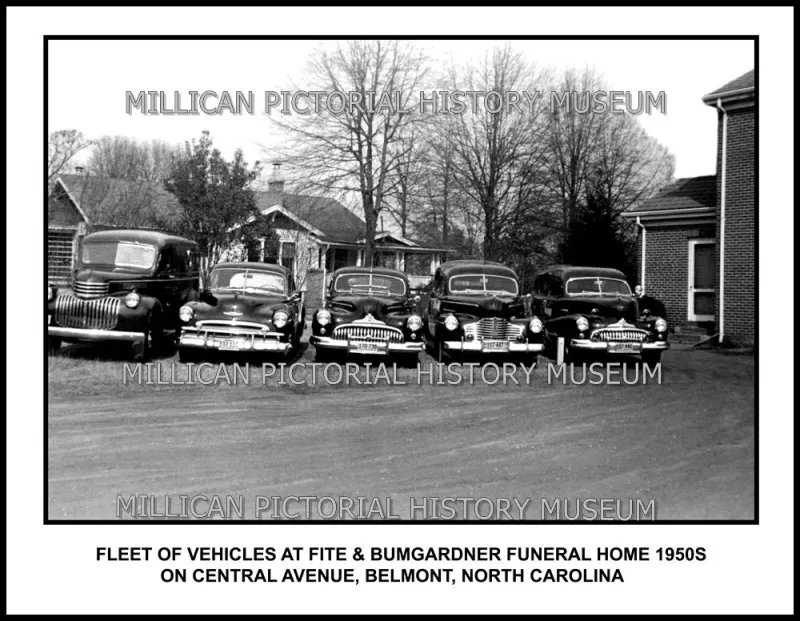
Somewhere in a box in your parents' attic, there might be a photograph of your grandfather at his retirement party. Suit and tie, a sheet cake, maybe a handshake from the plant manager. And then, for the next decade or so, a monthly check arriving like clockwork — not because he'd saved and invested wisely, but because that was simply how it worked.
That version of retirement is, for most Americans, gone. What replaced it is more complicated, more uncertain, and far more dependent on decisions you make at 25 that you probably weren't thinking hard enough about.
The Golden Age of the Pension
In the decades following World War II, the defined-benefit pension was the backbone of American retirement. The deal was straightforward: work for a company for 20 or 30 years, and they would pay you a fixed monthly income for the rest of your life. The employer bore the investment risk. The employee just showed up.
At the peak of pension coverage in the early 1980s, roughly 62% of private-sector workers participated in a defined-benefit plan, according to the Bureau of Labor Statistics. For government workers, the number was even higher. Retirement wasn't something you managed — it was something that happened to you, in the best possible sense.
Life expectancy in 1950 for a 65-year-old American man was about 13 additional years. For women, around 15. That meant the average retiree needed their pension to last roughly a decade — a manageable window that employers could plan around. Retire at 65, live to 78, collect your check. Simple math.
Social Security, signed into law in 1935, added another layer of security. By the 1960s, it had become a reliable income floor for most retirees. Combined with a pension, it meant many older Americans could maintain a reasonable standard of living without ever having touched a brokerage account.
The Shift Nobody Fully Warned People About
The 401(k) was created almost by accident. A provision tucked into the Revenue Act of 1978 — Section 401(k) — allowed employees to defer a portion of their salary into tax-advantaged accounts. By the early 1980s, companies realized this gave them a way to reduce pension liabilities by shifting retirement savings responsibility to workers. The switch happened quickly and quietly.
By 2022, only about 15% of private-sector workers had access to a traditional pension, according to the BLS. The defined-benefit plan didn't disappear — it largely moved into the public sector, covering teachers, police, and government employees. For everyone else, the 401(k) became the primary vehicle.
Here's what that actually means in practice. With a pension, your employer made the investment decisions and guaranteed the outcome. With a 401(k), you decide how much to contribute, which funds to invest in, and when to start drawing down — and if you make poor choices, or contribute too little, or retire during a market downturn, you absorb the consequences.
The Numbers That Put It in Perspective
Let's talk dollars. A worker retiring in 1965 with a pension covering 50% of their final salary of, say, $8,000 per year (roughly $77,000 in today's dollars) received about $4,000 annually — around $38,000 in 2024 terms — for life, with no investment risk whatsoever.
Now consider a worker retiring today. The median 401(k) balance for Americans aged 55 to 64 — the group closest to retirement — was approximately $134,000 as of recent Vanguard data. Financial planners often cite the "4% rule" as a sustainable annual withdrawal rate. Four percent of $134,000 is $5,360 per year. That's it. That's the income that balance generates.
Even factoring in Social Security — which averages around $1,900 per month, or about $22,800 annually for a typical retired worker — the picture is genuinely concerning for many Americans. The Employee Benefit Research Institute estimates that roughly 40% of Americans are at risk of running out of money in retirement.
The Longevity Problem
Here's what makes the math even harder. That 65-year-old in 1950 who needed 13 years of retirement income? Today's 65-year-old can expect to live, on average, to around 85. For women, the average pushes closer to 87. That's 20 to 22 years of expenses to fund — nearly double what the pension system was originally designed to cover.
A retirement that lasts 25 years isn't unusual anymore. It's increasingly normal. And funding 25 years of living expenses from a 401(k) you've been building since your late 20s requires a level of consistent saving and investment discipline that, frankly, the system doesn't do nearly enough to encourage.
A Transfer of Risk, Not Just Responsibility
What happened between your grandfather's retirement and yours wasn't just a change in how accounts are structured. It was a fundamental transfer of risk — from large institutions that could absorb it to individuals who often can't.
Employers shed the obligation of guaranteeing lifetime income. The government has repeatedly warned that Social Security's trust fund could face shortfalls as early as the mid-2030s without legislative changes. And individuals, many of whom have no formal financial education, are now expected to navigate investment markets, tax strategy, inflation, and longevity risk on their own.
Your grandfather's retirement was imperfect — it often excluded women, minorities, and anyone who didn't stay at one company for decades. That's worth acknowledging. But the security it offered was real.
The question facing anyone under 50 today isn't whether the system changed. It clearly did. The question is whether you've fully internalized just how much the responsibility now sits with you — and whether your savings rate reflects that reality.