Built to Last Forever: When Your Grandmother's Refrigerator Outlived Three Houses
The Appliance That Became an Heirloom
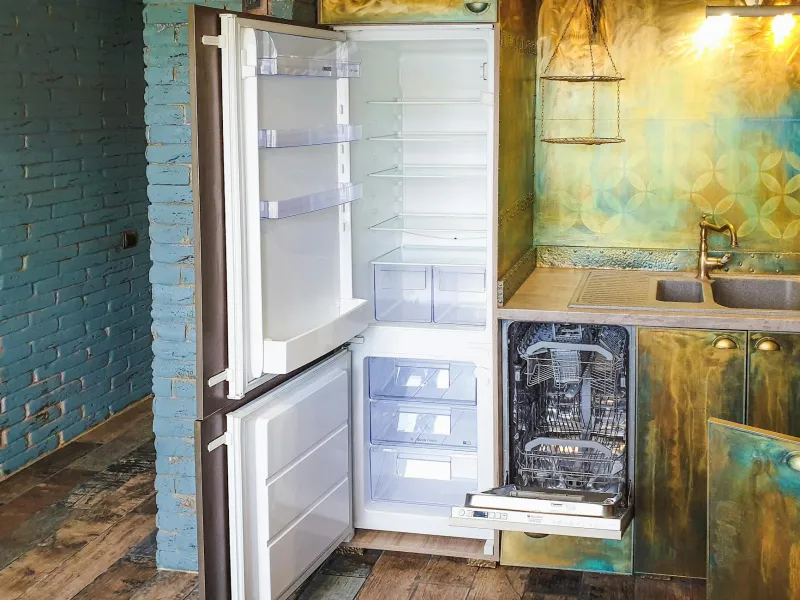
Sitting in Margaret Chen's garage is a 1962 Frigidaire refrigerator that still runs perfectly. She inherited it from her mother, who bought it new for $289 — about $2,800 in today's money. That refrigerator has outlasted three houses, two marriages, and countless kitchen renovations. It's older than the internet, older than MTV, older than Margaret's youngest daughter.
 Photo: Margaret Chen, via www.sbc.edu.sg
And it still makes ice.
This wasn't unusual. For most of the 20th century, American families bought major appliances with the expectation they'd last decades. A refrigerator, washing machine, or stove was considered a lifetime purchase — something you'd buy once and use until you moved or remodeled.
When Built to Last Meant Something
Post-war American manufacturers competed on durability. Companies like Maytag built their entire brand identity around longevity, with advertising slogans like "The Dependability People" and commercials featuring repair technicians with nothing to do because their appliances never broke.
The average refrigerator manufactured in the 1950s and 1960s lasted 30-35 years. Washing machines routinely operated for 20-25 years. Even basic models came with robust steel construction, simple mechanical controls, and components designed for easy repair. When something did break, neighborhood repair shops could fix it with standard parts for a fraction of replacement cost.
Families planned major appliance purchases like home improvements — significant investments made infrequently. Many couples received appliances as wedding gifts and used them throughout their entire marriage. The idea of replacing a working refrigerator seemed as wasteful as demolishing a perfectly good house.
The Planned Obsolescence Revolution
Today's appliances tell a different story. The average modern refrigerator lasts 10-13 years. Washing machines break down after 8-12 years. Dishwashers rarely make it past their tenth birthday. What changed wasn't just technology — it was philosophy.
Manufacturers discovered they could make more money selling appliances that broke down predictably. This "planned obsolescence" strategy deliberately designs products with limited lifespans, forcing consumers into regular replacement cycles. Components that could last decades are engineered to fail just after warranty periods expire.
Modern appliances use cheaper materials, more complex electronics, and proprietary parts that make repairs expensive or impossible. Circuit boards replace mechanical controls. Plastic components substitute for metal ones. When today's appliances break, repair costs often exceed replacement prices, pushing consumers toward new purchases.
The True Cost of Disposable Appliances
This shift has dramatically changed household economics. Where previous generations made one major appliance purchase per decade, modern families replace appliances every 8-12 years. A kitchen that once required $3,000 in appliances for 30 years now demands $15,000-20,000 over the same period.
The financial impact extends beyond purchase prices. Frequent replacements mean constant shopping, research, delivery coordination, and installation costs. Extended warranties — once unnecessary — now feel essential. Many families effectively lease appliances through repeated replacement rather than owning them outright.
Environmental costs compound the financial burden. Americans discard 9 million appliances annually, creating mountains of electronic waste. Manufacturing replacement appliances consumes enormous resources and energy. The environmental footprint of replacing appliances every decade far exceeds the impact of maintaining durable ones for 30 years.
The Repair Culture We Abandoned
Durable appliances supported an entire ecosystem of local repair businesses. Every neighborhood had appliance repair shops staffed by technicians who knew how to fix everything from refrigerator compressors to washing machine transmissions. These businesses provided middle-class jobs while keeping appliances running for decades.
Modern appliances killed this repair culture. Complex electronics require specialized diagnostic equipment. Proprietary parts come only from manufacturers at inflated prices. Many appliances use sealed components that can't be serviced. The neighborhood repair shop has largely vanished, replaced by "customer service" phone numbers that usually recommend replacement over repair.
What We Lost Beyond Money
The shift from durable to disposable appliances represents more than economic change — it reflects a fundamental alteration in American values. Previous generations viewed appliances as investments in home life. Families took pride in maintaining possessions that served them well over decades.
Today's throwaway culture treats appliances as temporary conveniences rather than lasting investments. We've normalized the idea that major household items should be replaced regularly, accepting constant equipment churn as normal rather than wasteful.
This mindset extends beyond appliances to cars, electronics, furniture, and clothing. We've created an economy based on replacement rather than repair, consumption rather than conservation.
The Premium for Permanence
Some manufacturers still produce durable appliances, but they've become luxury items. Commercial-grade appliances designed for restaurant use can last 20-30 years, but they cost 2-3 times more than consumer models. European brands often emphasize longevity, but their higher prices put them beyond many families' budgets.
The cruel irony is that buying cheap appliances frequently costs more than investing in durable ones. Families who can't afford quality upfront end up spending more over time through repeated replacements — a perfect example of how being poor becomes expensive.
Lessons from the Garage
Margaret Chen's 1962 Frigidaire still hums quietly in her garage, a 60-year testament to American manufacturing when durability mattered more than profit margins. It represents an era when companies competed to build the longest-lasting products rather than the most frequently replaced ones.
That refrigerator has saved Margaret's family thousands of dollars in replacement costs while providing decades of reliable service. It's an accidental investment that has paid dividends no modern appliance will ever match.
Somewhere along the way, we decided that buying things once was less profitable than buying them repeatedly. We traded durability for convenience, longevity for features, and repair culture for replacement culture. Margaret's refrigerator reminds us what we gave up — and what we might gain by demanding better.