College Used to Be Something You Paid Off in a Summer. Now It Follows You for Decades.
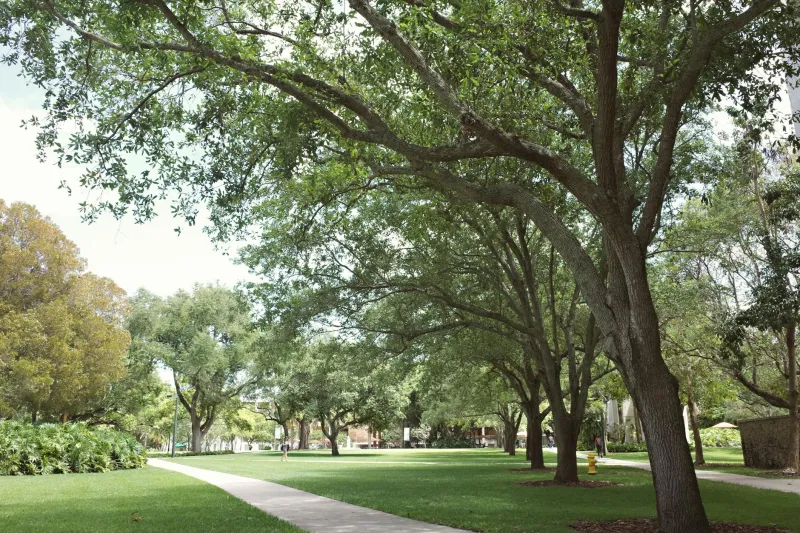
In the summer of 1971, a kid from Ohio could work a factory job, save up his wages, and walk onto a state university campus in September with enough money to cover his full year's tuition — and still have cash left for books, rent, and the occasional Friday night out. No student loans. No financial aid forms. No co-signers. Just a summer's worth of honest work and a clear path forward.
That picture feels almost fictional today. But it wasn't. For a generation of Americans, college was genuinely affordable — a public investment in upward mobility that didn't require betting your financial future on a degree.
Something changed. And understanding what changed — and why — is one of the more important stories in modern American economic life.
The Numbers From Then
Let's get specific, because the contrast only lands when you see the actual figures.
In 1970, average annual tuition at a four-year public university in the United States was approximately $394. Room and board brought the total cost of attendance to around $1,500 per year. For a full four-year degree, a student might spend somewhere between $5,000 and $7,000 in total — including living expenses.
The federal minimum wage in 1970 was $1.60 per hour. A student working full-time over a summer — roughly 400 hours — could earn around $640. That covered tuition with money to spare. A part-time job during the school year handled the rest.
Even private universities were, by modern standards, shockingly cheap. Harvard's tuition in 1970 was $2,600 per year. Yale was $2,550. These were not bargain institutions, but a determined student from a working-class family could — and many did — finance their way through without drowning in debt.
The Numbers From Now
Fast-forward to the 2024–25 academic year.
Average annual tuition and fees at a four-year public university for in-state students: approximately $11,600. Add room, board, books, and other expenses, and total annual cost of attendance hits roughly $28,000 to $30,000.
For four years, that's a $110,000 to $120,000 commitment — before a single dollar of interest on loans.
At private universities, the numbers are even more arresting. The average private nonprofit university now charges around $42,000 per year in tuition alone. Harvard's current sticker price? Over $59,000 per year for tuition, with total cost of attendance exceeding $82,000.
The federal minimum wage is $7.25 per hour — a rate that hasn't moved since 2009. A student working full-time all summer earns roughly $2,900 before taxes. That covers about one month of a private university's annual bill.
How Did This Happen?
The tuition explosion didn't happen overnight, and no single policy or decision caused it. It was a slow accumulation of forces that, together, rewired the economics of higher education.
State funding retreated. Public universities were once heavily subsidized by state governments, which is why tuition was so low. Starting in the 1980s — and accelerating through every subsequent recession — states began cutting their per-student appropriations. Universities had to make up the difference somewhere. They turned to tuition.
Student loans became easier to get. The federal student loan system expanded significantly through the 1970s and '80s, and the availability of easy credit did what easy credit usually does: it allowed prices to rise. When students can borrow whatever they need, institutions face less market pressure to keep costs down. This dynamic — sometimes called the Bennett Hypothesis after Reagan's education secretary — is debated by economists, but most agree it played at least some role in the cost spiral.
The amenities race took off. Starting in the 1990s, universities began competing for students in new ways — not just with academic prestige, but with recreation centers, luxury dormitories, dining halls with sushi stations, and sprawling administrative departments. These things cost money, and that cost gets passed on.
Administrative bloat became real. Between 1975 and 2005, the number of full-time administrators at American universities grew by 85%, while the number of full-time faculty grew by only 51%, according to research from the Delta Cost Project. More administrators mean more salaries, more offices, more overhead — and higher tuition.
What It Means to Graduate Today
The Class of 2024 entered a world where the average student loan borrower carries roughly $37,000 in debt at graduation. For graduate and professional school borrowers, that number climbs much higher — law school and medical school graduates routinely carry $150,000 to $250,000 in loans.
These aren't just numbers. They shape life decisions. Graduates delay buying homes. They postpone having children. They take higher-paying jobs in fields they didn't plan to enter — not because of passion, but because of monthly loan payments. The 30-year-old who studied art history or social work and now owes $60,000 isn't an abstraction. There are millions of them.
In 1970, a college degree was a reasonable bet with manageable stakes. You'd spend a few years, pay as you went, and emerge with credentials and relatively clean financial footing. The degree paid off quickly.
Today, the calculus is genuinely complicated. Lifetime earnings for college graduates still exceed those of non-graduates — but the margin has to work harder to justify the upfront cost. And for students who borrow heavily to attend schools where they don't graduate, or programs that don't lead to well-paying work, the debt can become an anchor that's nearly impossible to lift.
The Bigger Picture
There's a version of this story that ends with progress — and in some ways, it does. More Americans attend college today than ever before. Online programs, community colleges, and income-share agreements are creating new paths. Some states have moved toward free community college.
But the core transformation is hard to spin optimistically. Something that was once a publicly supported, broadly accessible investment in human potential has become one of the most expensive financial decisions most Americans will ever make — one they're often asked to commit to at 18, before they fully understand what they're signing up for.
The student who worked a summer job and walked onto campus debt-free in 1971 wasn't living in a fantasy. He was living in a country that had made a different set of choices about who should pay for education — and what it should cost.
That country still exists, technically. It just charges a lot more to get in.