The Free Afternoon That Built Your Family — Before Fun Came With a Monthly Fee
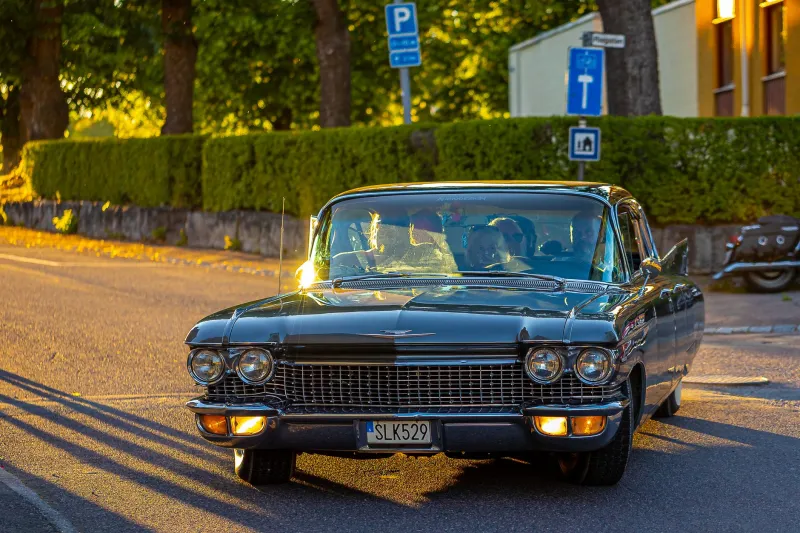
Ask someone who grew up in the 1950s or '60s what their family did on Sunday afternoons, and you'll hear a version of the same story. They drove. Nowhere specific. Dad pointed the car down a road he hadn't taken before, Mom packed sandwiches, the kids argued in the back seat, and two hours later everyone was home — tired, satisfied, and somehow closer than they'd been that morning.
The Sunday drive wasn't a planned activity. It wasn't an experience you purchased. It was just time, motion, and the company of people you loved. And for millions of American families across several decades, it was enough.
When the Road Was the Destination
The postwar American car culture turned the Sunday drive into something close to a national ritual. Gas was cheap — often under 30 cents a gallon through most of the 1950s and '60s. Roads were improving. Cars were new enough to feel exciting and reliable enough to trust. Driving itself was still a pleasure rather than a commute.
Families would load up after church or a late breakfast and just go. Maybe they'd end up at a state park. Maybe they'd find a roadside stand selling peaches. Maybe they'd just loop through the countryside and come home. The point was never the destination. The point was the togetherness — the captive proximity of a car, the shared view out the windshield, the conversations that happened because there was nothing else to do.
Backyard gatherings filled the same function. Neighbors wandered over without calling first. Kids played in the street until the streetlights came on. Adults sat on porches and talked about nothing important for hours. None of it required a reservation, a ticket, or a Wi-Fi password.
What Replaced the Sunday Drive
Somewhere between then and now, leisure became a product. And like most products in the American economy, it kept getting more expensive.
The shift happened in layers. First came cable television, which added a monthly bill to the entertainment budget but also anchored families indoors. Then came video games, DVDs, and eventually streaming — each wave adding cost and subtracting the impulse to simply go outside and wander.
Today, the average American household pays for multiple streaming services simultaneously. Netflix, Disney+, Hulu, Max, Amazon Prime Video — the subscriptions stack quickly. Industry analysts estimate that American families spend an average of $60 to $100 per month on streaming alone, not counting music services, gaming subscriptions, or the apps that have quietly become part of daily life.
And that's just the passive entertainment. Add youth sports fees, weekend activities, theme park tickets, and the general expectation that outings involve spending, and the cost of keeping a family entertained has become a genuine budget line item — one that simply didn't exist two generations ago.
The Attention Economy Changed Everything
It's not just about money, though the money is real. It's about what fills the space where boredom used to live.
The Sunday drive worked partly because there wasn't much competition for your attention. You were in a car. The radio had three stations. You looked out the window, you talked, you thought. Boredom — the kind that forces you to engage with the people around you — was built into the experience.
Now, every member of a family carries a device that offers infinite stimulation at zero additional cost. The ten-year-old in the back seat isn't looking out the window — she's watching YouTube. Dad's checking scores. Mom's scrolling through something she'll forget by the time they arrive. The car is full of people staring at separate screens, together in body but not particularly in spirit.
This isn't a criticism of technology. It's just an honest description of what changed. The devices are good at capturing attention. They're designed to be. And attention is exactly what used to go toward the people sitting next to you.
What the Research Actually Says
Psychologists who study family bonding have documented something that feels intuitively true: unstructured time together — the kind with no agenda and no screen — tends to produce stronger relational connections than organized, purchased experiences. The memories people report most vividly from childhood aren't usually the expensive vacations. They're the ordinary afternoons that somehow stuck.
There's a concept researchers call "idle togetherness" — simply being near each other without a specific purpose. It sounds almost too simple. But it's what the Sunday drive delivered, and it's increasingly hard to manufacture in a world that has filled every idle moment with content.
The Families Who Figured It Out
Some families are pushing back. Screen-free Sundays. Mandatory walks. Road trips with a "phones in the glove compartment" rule. These aren't new ideas — they're old ideas being deliberately reclaimed against the current of a culture that keeps adding fees and screens to the definition of fun.
The interesting thing is that these families report the same thing: the first hour is awkward, because nobody quite knows what to do without a device. And then something shifts. People start talking. Kids start noticing things out the window. The conversation goes somewhere unexpected.
It turns out the Sunday drive still works. You just have to choose it.
And unlike pretty much everything else in 2025, it's still free.